


What Direct Laser Patterning Can Change in Touch Panel Manufacturing
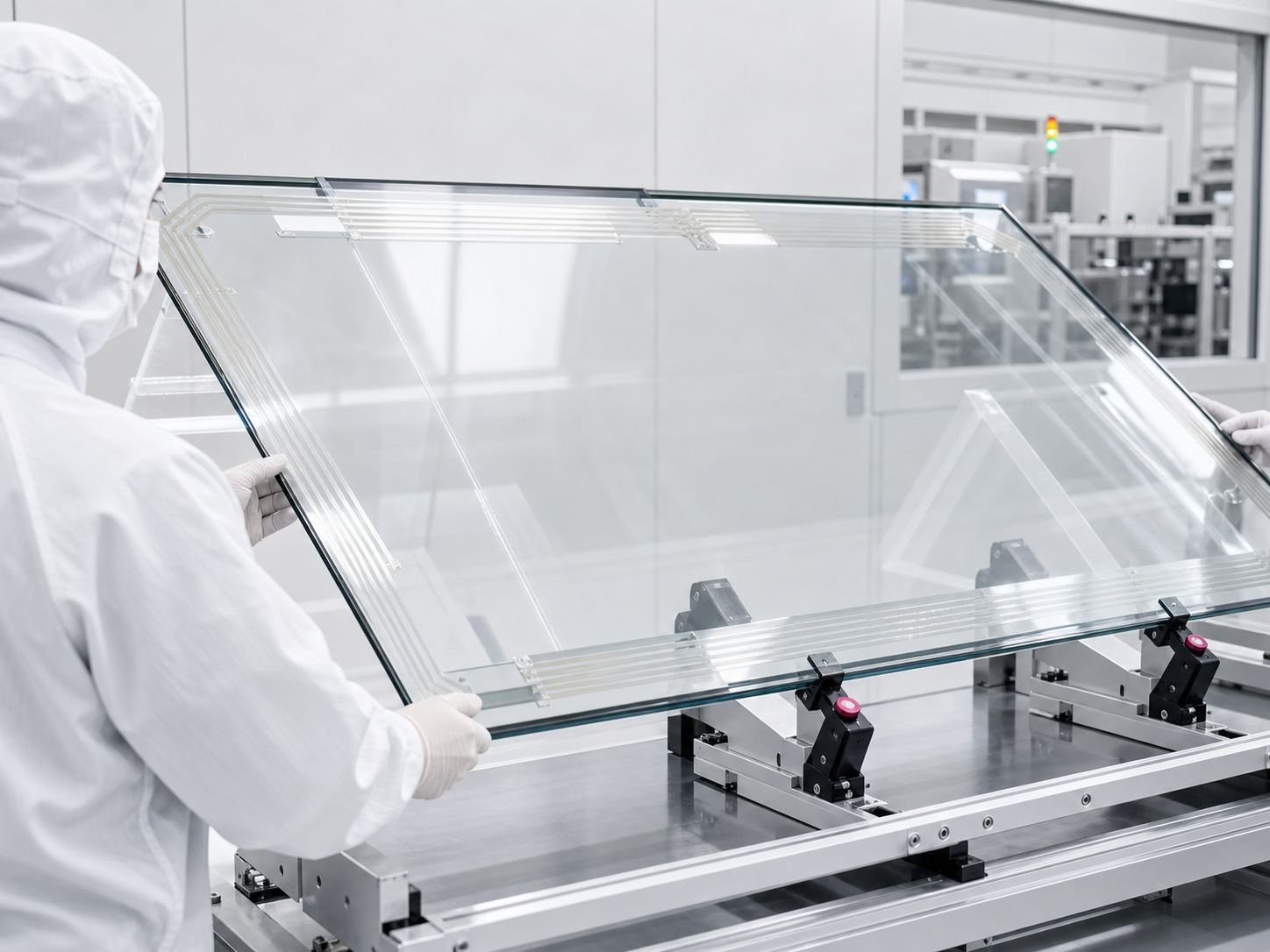
Touch panel and display substrates — particularly for industrial, automotive, and digital signage applications — are becoming larger. As screen size increases, manufacturing equipment grows, and larger volumes of chemicals used for circuit formation must be managed and disposed of, increasing cost, technical barriers, and environmental impact.
This is where laser direct patterning enters consideration. However, switching to a laser does not solve everything automatically. Larger substrates create challenges that are specific to laser processing.
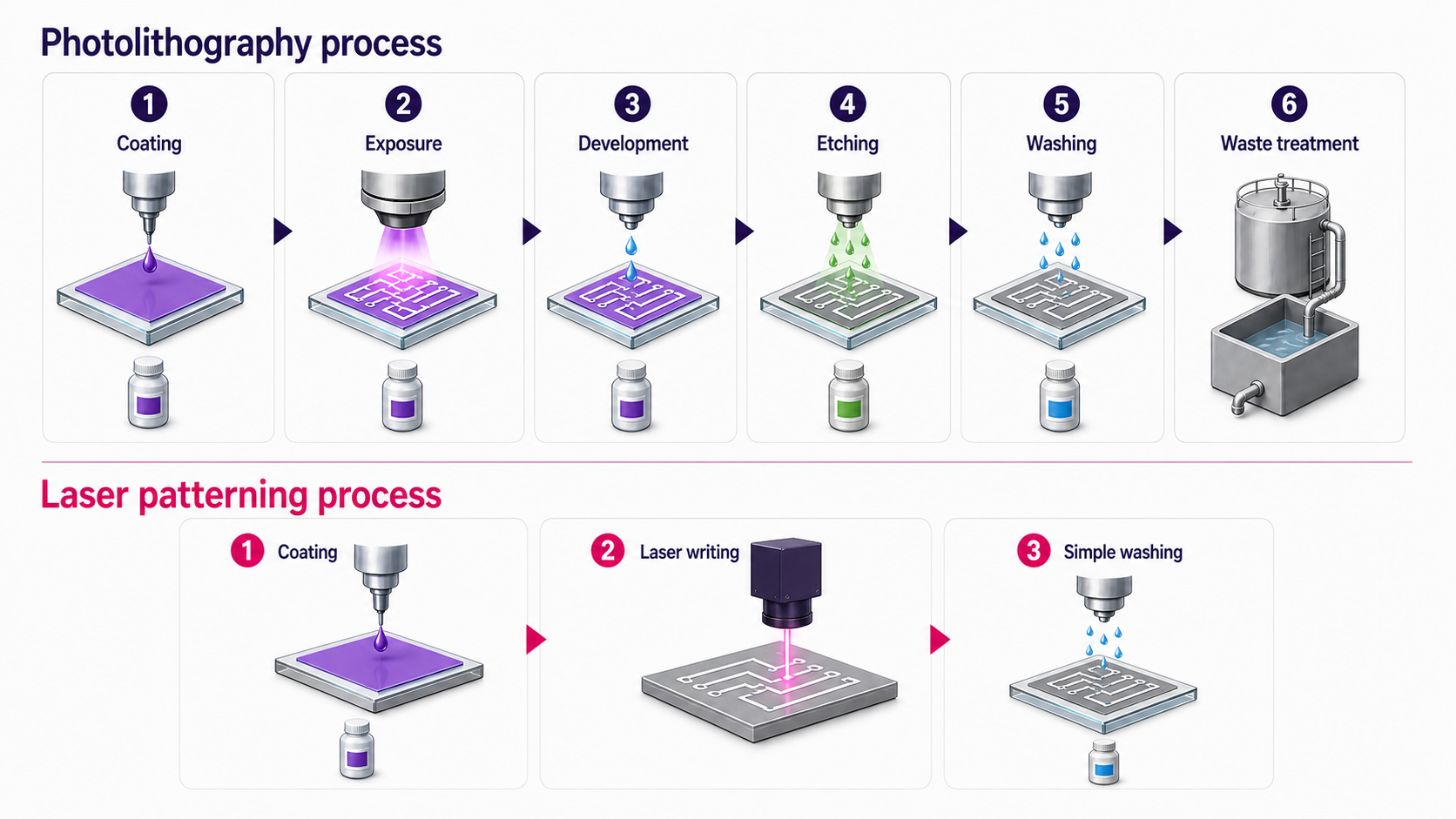
Touch Panel Patterning Carries Process Steps and Chemicals
Patterning ITO films generally runs through many steps: resist coating, exposure, development, etching, stripping, and washing. Silver paste wiring centers on screen printing and firing. Both routes involve chemicals, wastewater from washing, and multiple process steps.
As substrates grow, the equipment scale, chemical volume, washing load, and per-sheet yield risk of each step all swell. The pattern itself may be fine, but the whole process required to realize it grows heavier — that is the reality of large substrates.
What Laser Patterning Can Change
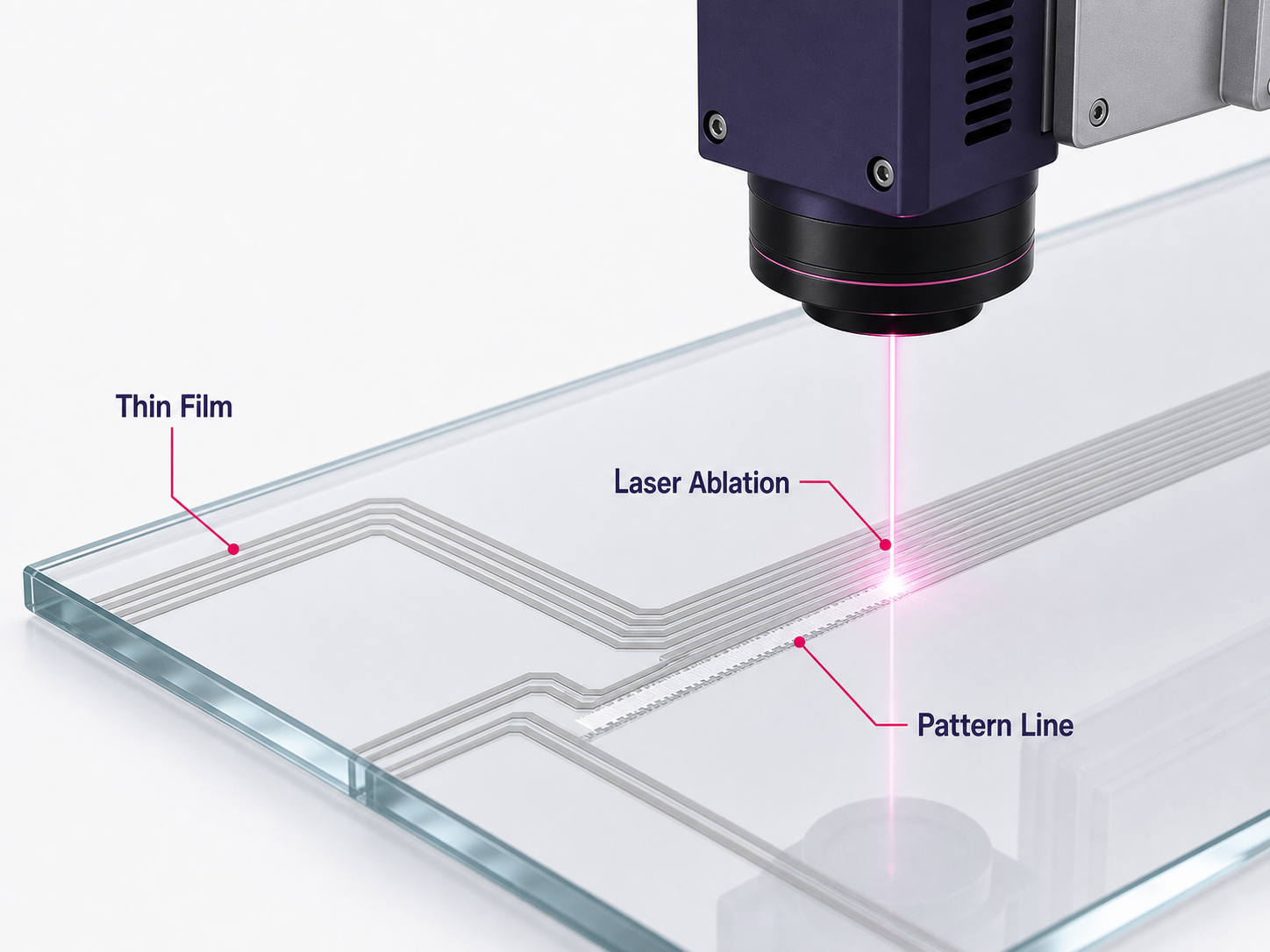
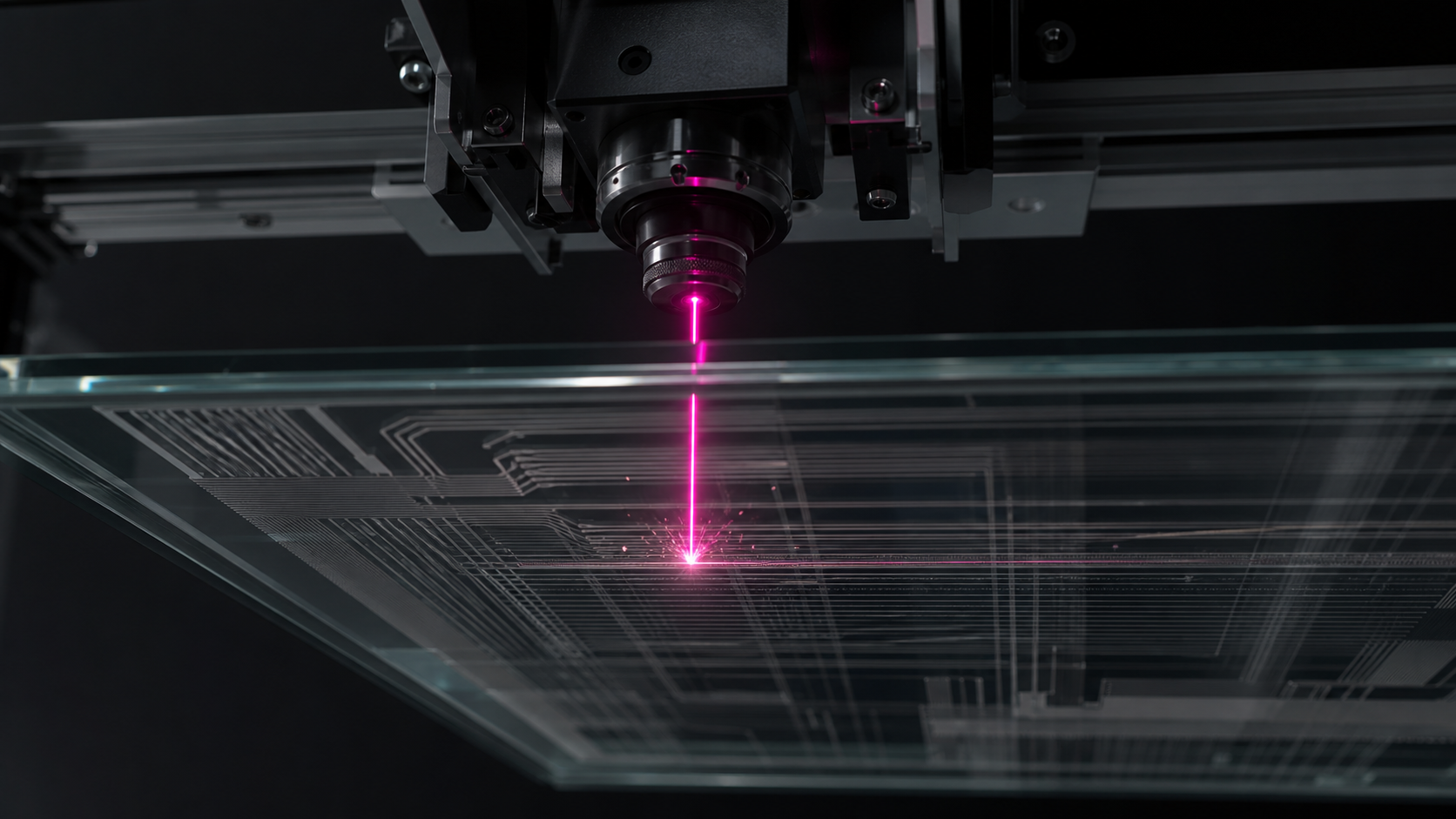
A laser can remove a deposited layer directly, without a mask or chemical step, drawing the pattern as the data specifies. Insulation separation, removal or trimming of unwanted silver paste after printing, and cutting of glass or film are among the applicable processes.
If some chemical steps can be replaced, this may lead to a shorter process, less chemical use and wastewater, and easier maintenance. The market significance of replacing chemical steps with a laser is covered in Why Chemical-Free Patterning Matters in Manufacturing.
Large-Area Laser Patterning Depends on Working-Field Design
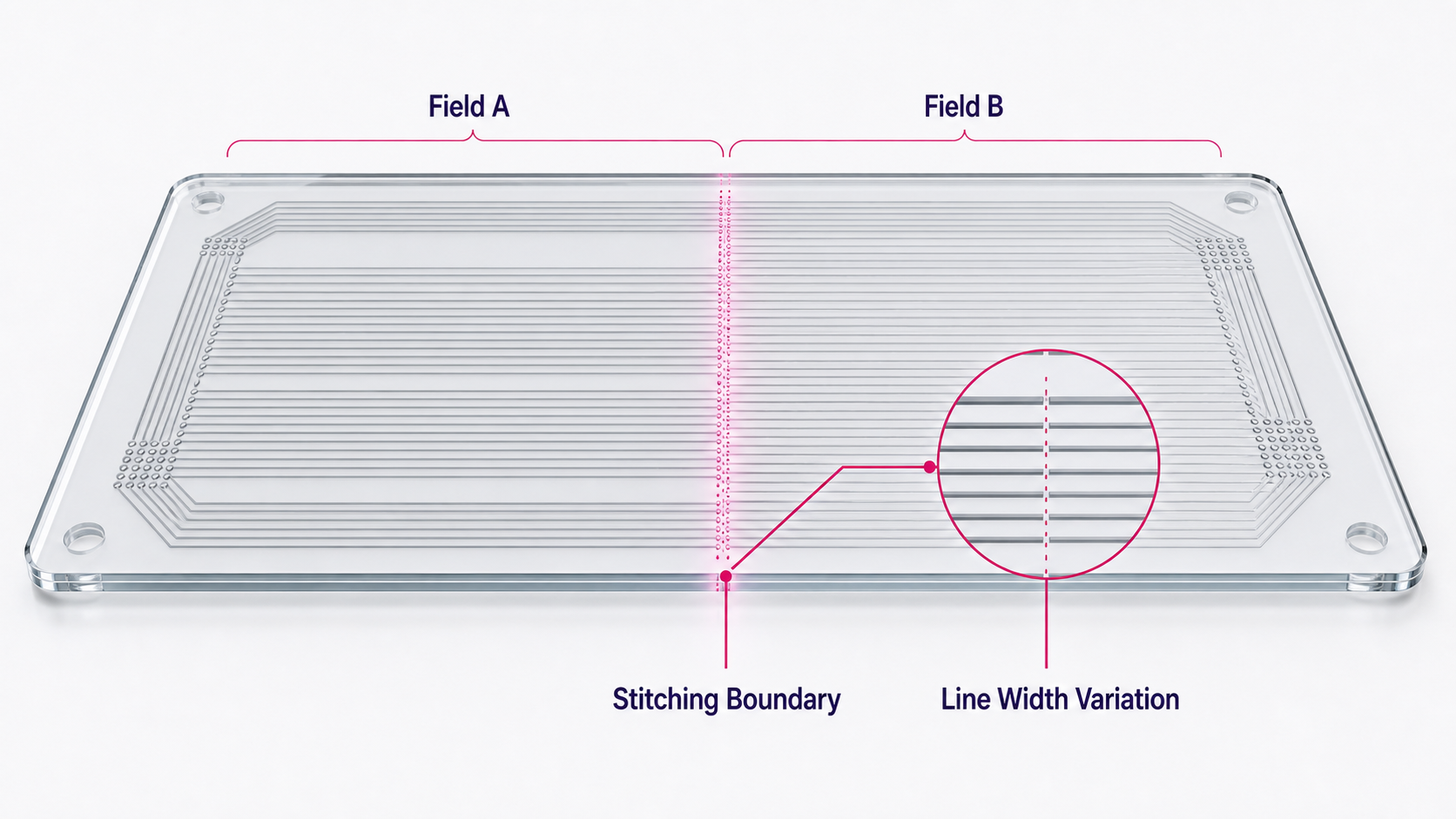
Simply replacing the process with a laser may reduce waste liquid and process steps, but it does not by itself meet the need for larger ITO patterning areas.
In production, working-field size becomes a major constraint. Equipment with a small field must process a large substrate through multiple step-and-repeat operations, which increases takt time and makes quality variation at stitching boundaries more likely.
ITO film and silver paste patterning therefore require more than the ability to remove the film. The system must process a wide area uniformly, minimize divided processing, and maintain stable quality within the production takt time.
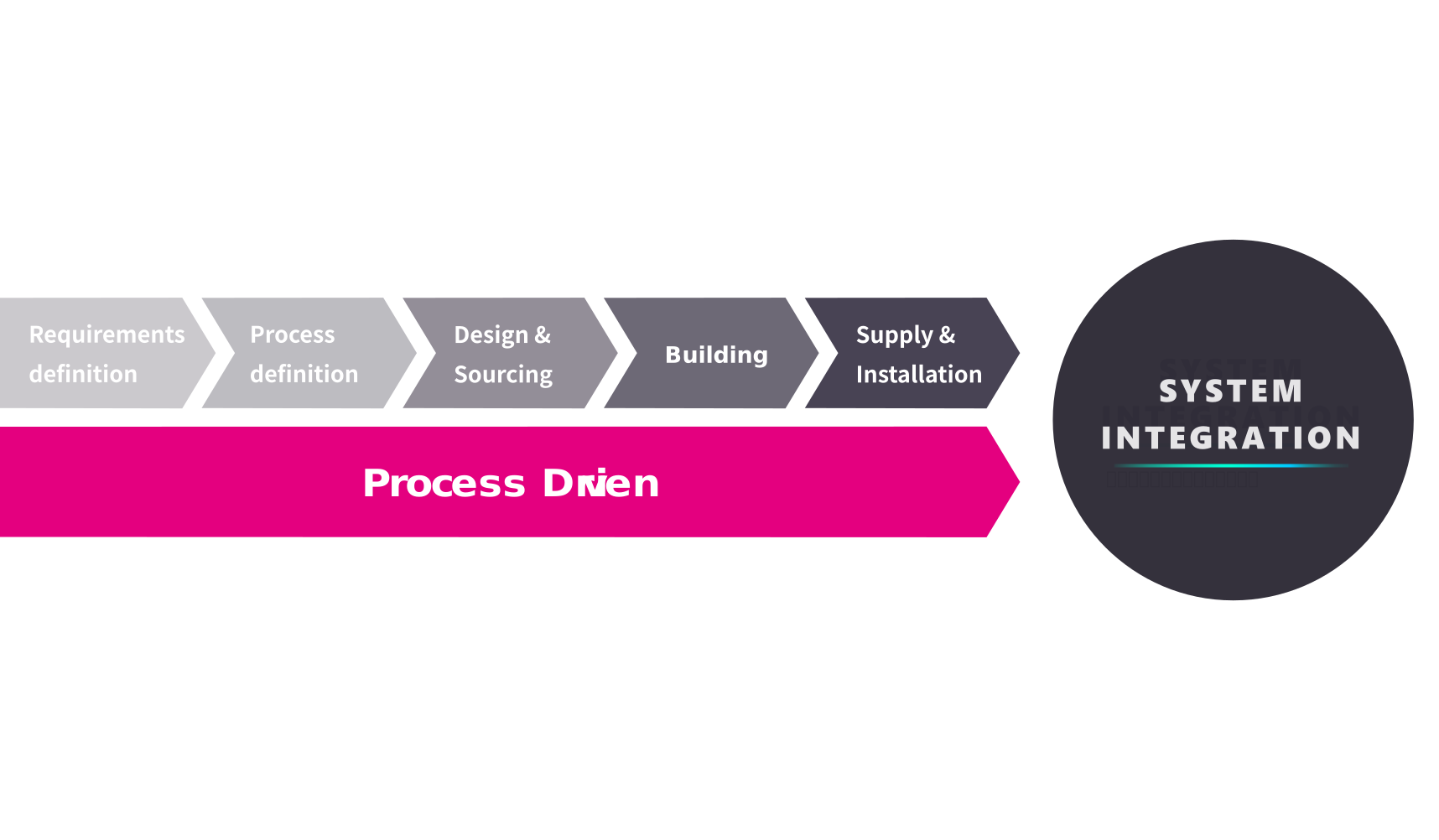
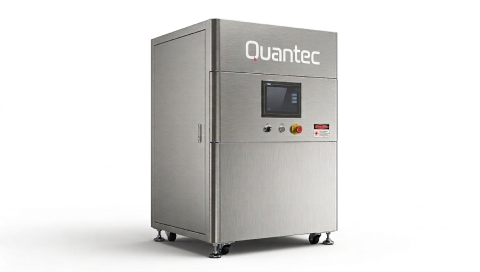
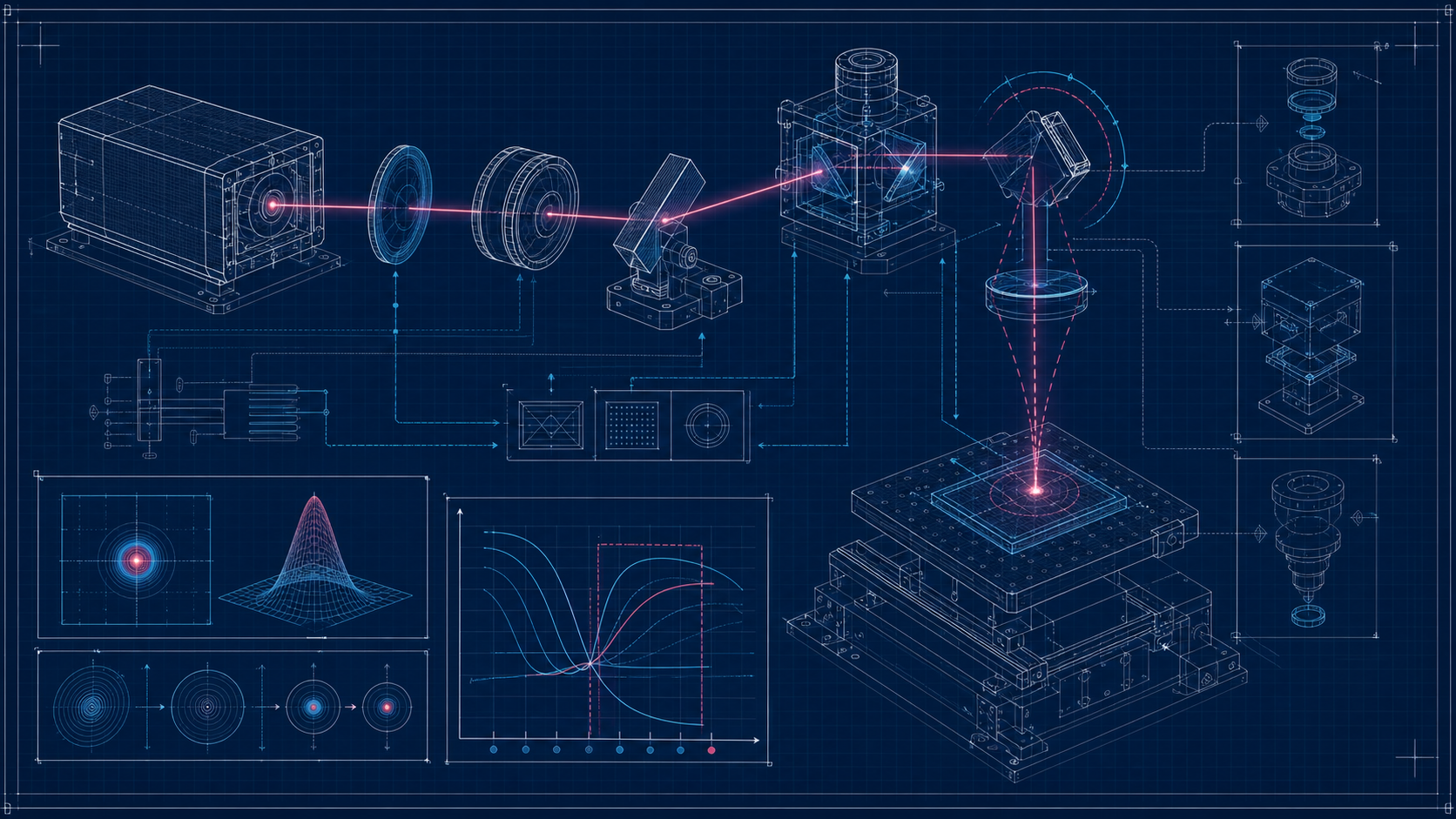
Quantec addresses this challenge by designing large-area optics, scan control, and equipment configuration as one system. Through PICTURA and UV/IR laser patterning equipment, we support the introduction of large-area laser patterning into touch panel manufacturing.