


Our Process-Driven Approach
Designing Laser Systems from Physics
Most laser processes are developed around available equipment. A laser is selected, parameters are tuned, and the process is adapted to what the hardware can do.
Quantec works in the opposite direction. We start by asking what the material needs — what interaction, at what energy level, at what timescale — and then select and configure the tools accordingly.
Why Process Design — Not Parameter Tuning — Matters
Test processing can produce results by chance. Mass production cannot afford that.
What matters in manufacturing is not laser specs. It is process replaceability, production stability, quality, and takt time. These cannot be achieved by parameter tuning alone. They require designing the process backward from the required outcome.
What Process Design Means in Practice
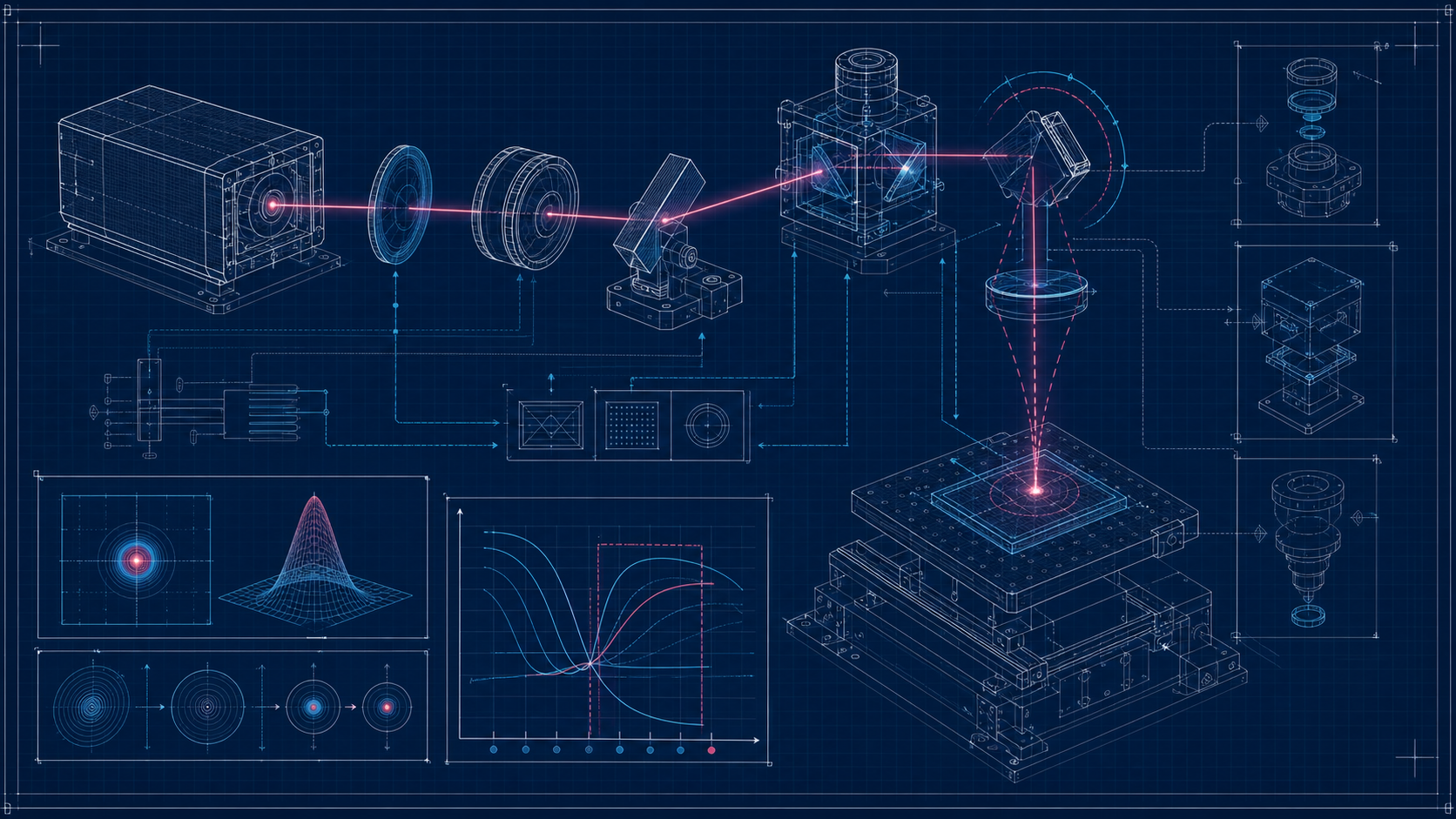
Wavelength, pulse width, energy density, scan strategy, and optics are not a list of laser specifications. They are variables selected from the required processing result backward.
- Wavelength — selected from material absorption characteristics
- Pulse width — designed around the required thermal influence zone
- Energy density and repetition rate — defined from process stability requirements
- Scan strategy — configured from quality and throughput targets
- Optical architecture — designed for field size, depth of focus, and beam delivery needs
How We Design a Process
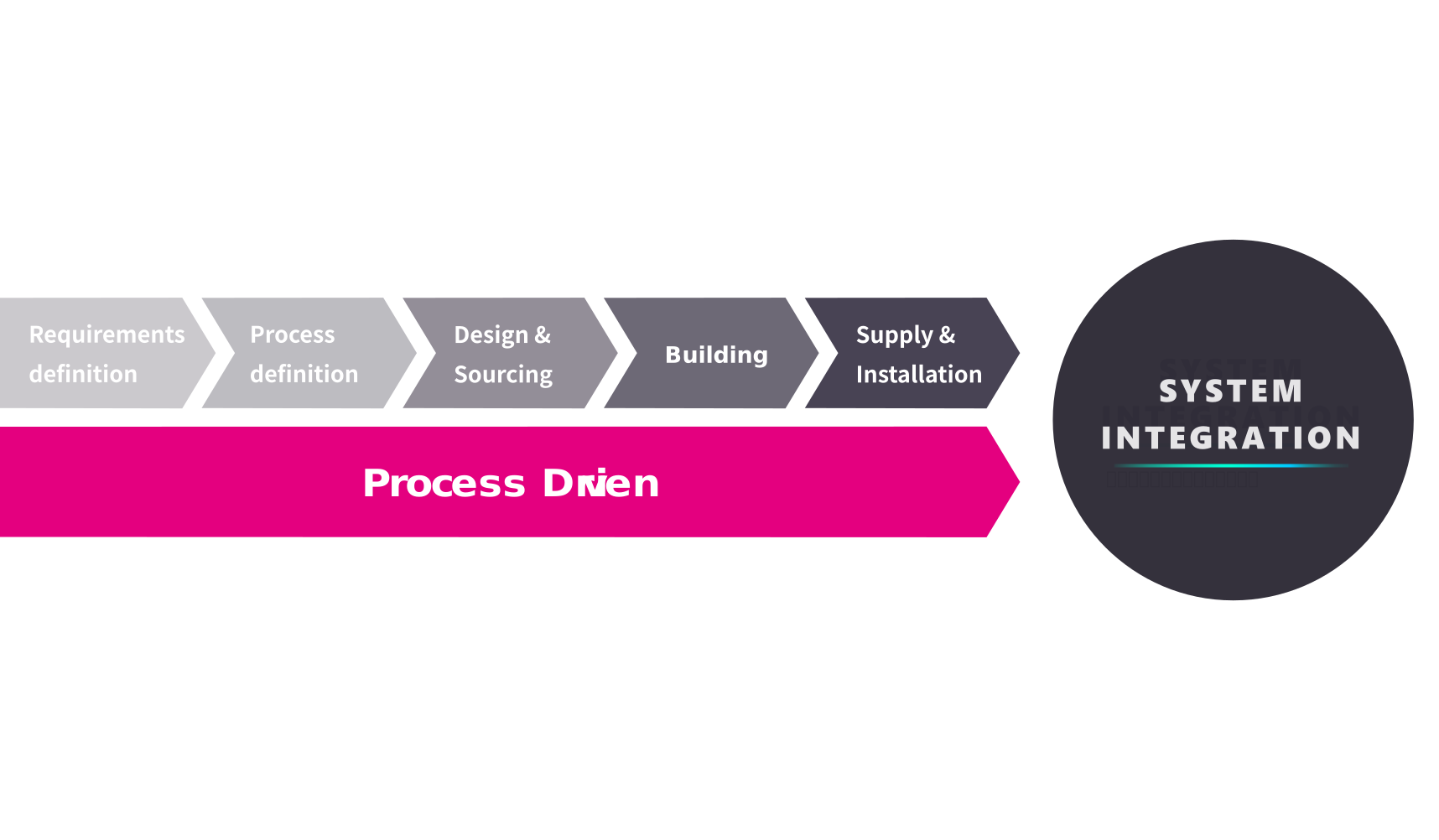
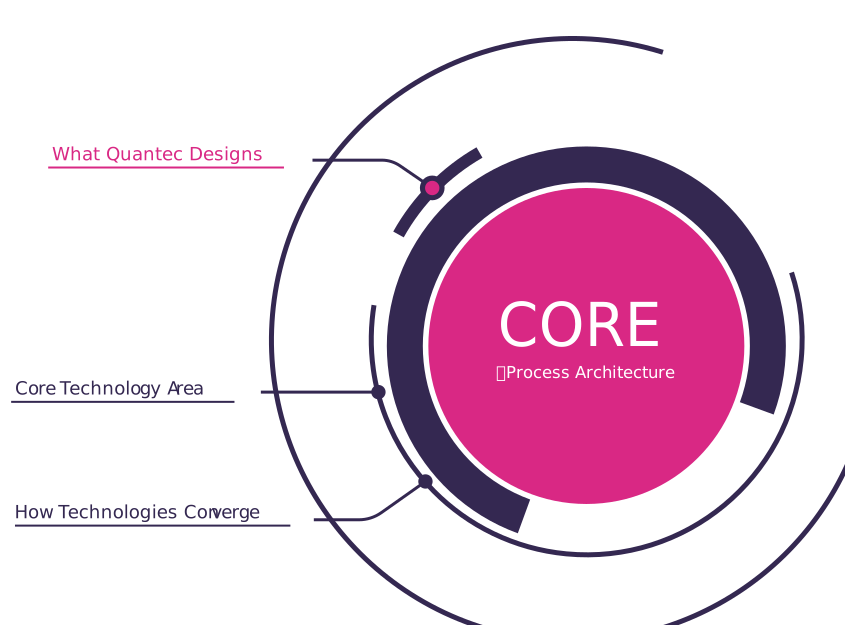
This is how we think when designing a laser process. For how we work with you through a project, see System Integration →
Material Analysis
Every process design starts with the material. We analyze how the target material absorbs, reflects, and responds to light, including thermal diffusion, phase transition thresholds, and structural response at the micro level.
Process Window Design
We define the stable processing range, the insufficient processing range, and the excessive processing range. A usable process window must absorb differences in material, lot, equipment, and environment.
The goal is not to find one successful condition, but to design a condition range that can be used in production.
System Architecture
We configure the optical, mechanical, and control systems that deliver the process window in a production environment. Beam delivery, scanning, stage and handling, sensing, feedback, and automation interfaces are designed as one integrated system.
Production Integration
A verified process must also be manufacturable at scale. We support the transition from proof-of-concept to production-ready operation, including stability validation, acceptance testing, and ongoing process improvement.
What Process Design Enables
Manufacturing sites do not need a comparison of equipment specifications alone. They need a design that can replace an existing process while satisfying quality, takt time, and production stability.
The wrong question is “How can we use this laser?” The better question is “What process should be engineered?” Quantec designs the process and system backward from material reaction, required quality, and takt time.