



Why Laser Source Independence Matters in Industrial Manufacturing
When manufacturers evaluate a laser system, proposals often start from the light source. “Here is what our fiber laser can do.” “Let us run trials at this pulse width.” The approach seems practical, but it carries a structural bias.
Oscillator manufacturers naturally design proposals around their own light sources. That is not necessarily intentional, but the result is that processes get qualified on specific oscillators and embedded in production equipment. The customer gets a working system. They also get a long-term dependency on a particular light source, and that dependency compounds quietly over the following decade.
What manufacturers actually need is not a specific laser. They need processing results. And over a production system’s life, those results are most reliably delivered by designs that do not depend on a single oscillator configuration remaining available, affordable, and maintainable.
Three Risks of Oscillator-Dependent Design
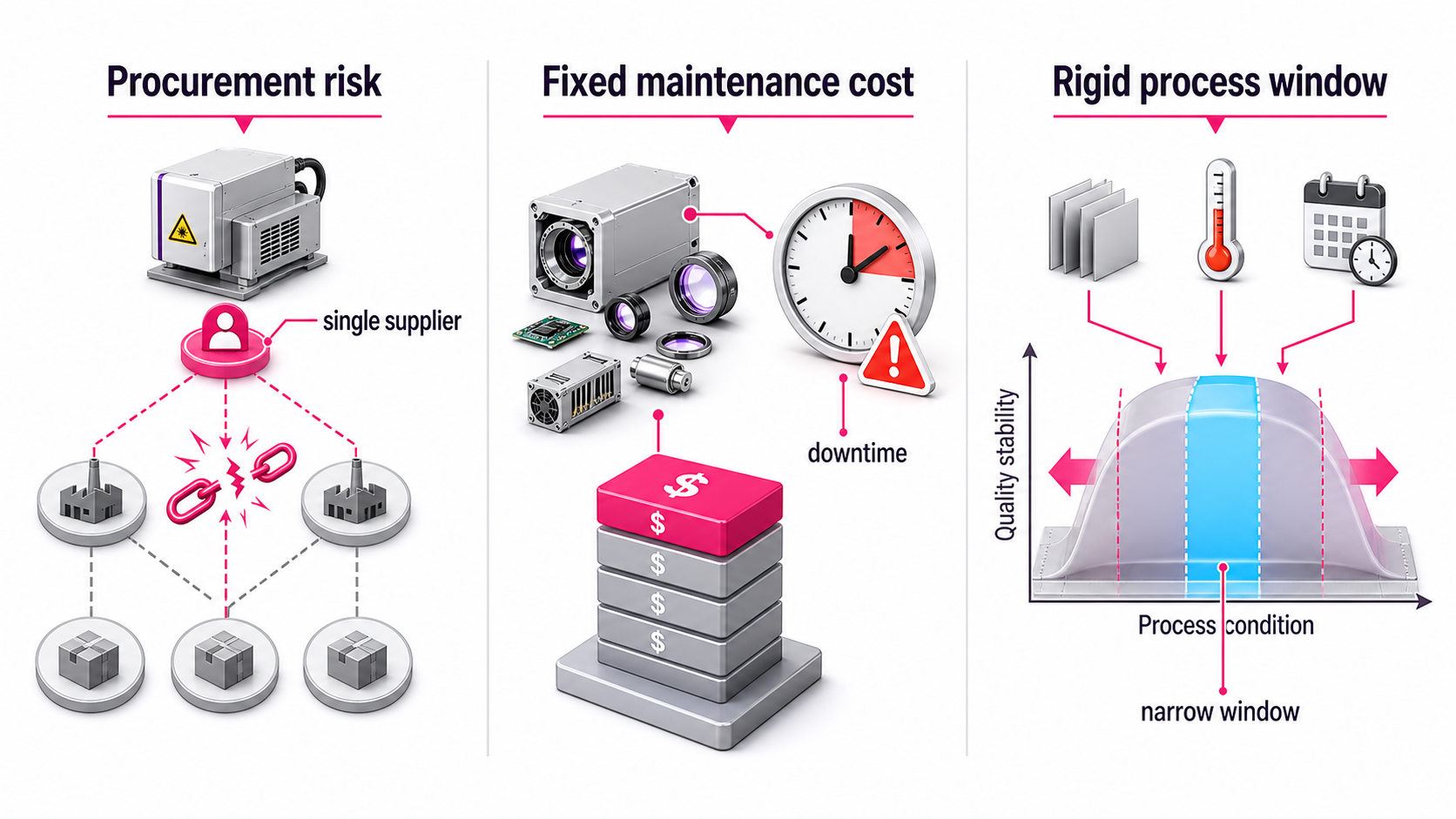
Sourcing concentration and supply chain exposure
A process qualified to a specific oscillator is exposed to whatever happens to that product line. Long-run production lines are expected to operate for ten to twenty years. Oscillator product lines evolve on shorter timescales. And increasingly, the optical and semiconductor supply chains that underpin laser components are subject to geopolitical risk.
Concentration in a specific country or supplier network introduces the possibility of supply disruption that no purchasing team can fully hedge.
Fixed maintenance costs
When a process is tied to a specific oscillator family, switching to a next-generation model or a lower-cost alternative triggers condition re-verification: downtime and validation cost, not just parts cost. Competitors who can move their laser supply chain to optimize costs have a structural advantage. A process locked to a single configuration cannot capture that benefit.
Rigid process windows
Designing around a single oscillator’s exact parameters leaves limited margin for the normal variation of manufacturing: material lot differences, aging, component substitutions in the supply chain, and facility temperature changes. Process windows that cannot absorb that variation become quality liabilities.
Depend on Results, Not Hardware
Software engineering has a principle called Dependency Inversion: depend on abstractions, not on concrete implementations. When a system depends on an interface rather than a specific class, the underlying implementation can change without breaking the logic above it.
Laser system design benefits from the same structure.
A process designed around a specific oscillator model number is a concrete dependency, fragile to anything that changes below it. A process designed around required processing outcomes, such as target fluence range, process window, and quality criteria, is an abstract dependency. When the oscillator changes, whether by manufacturer, generation, or wavelength, the process specification survives because it was never defined in terms of one piece of hardware.
Integrated System Design at Quantec
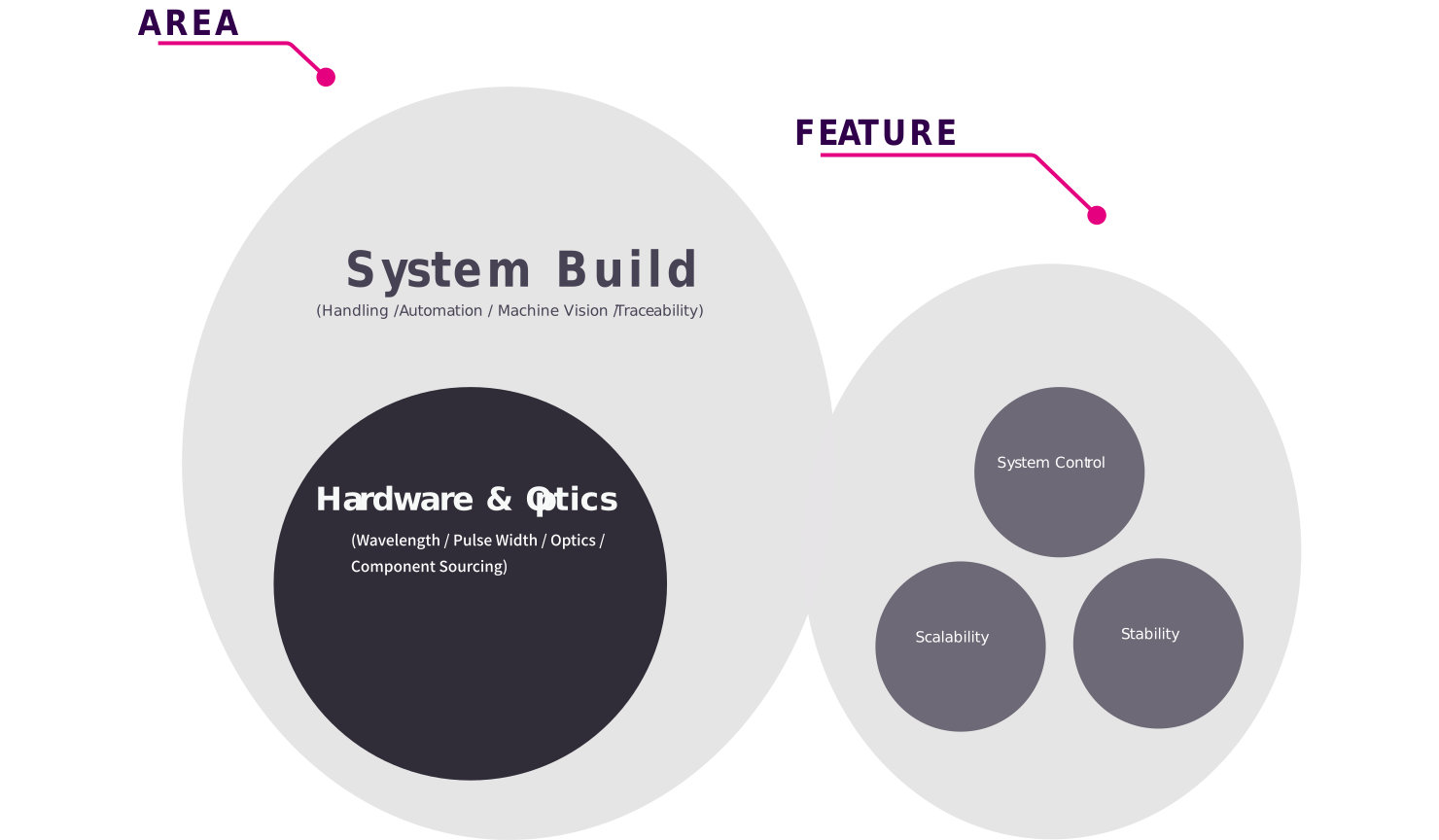
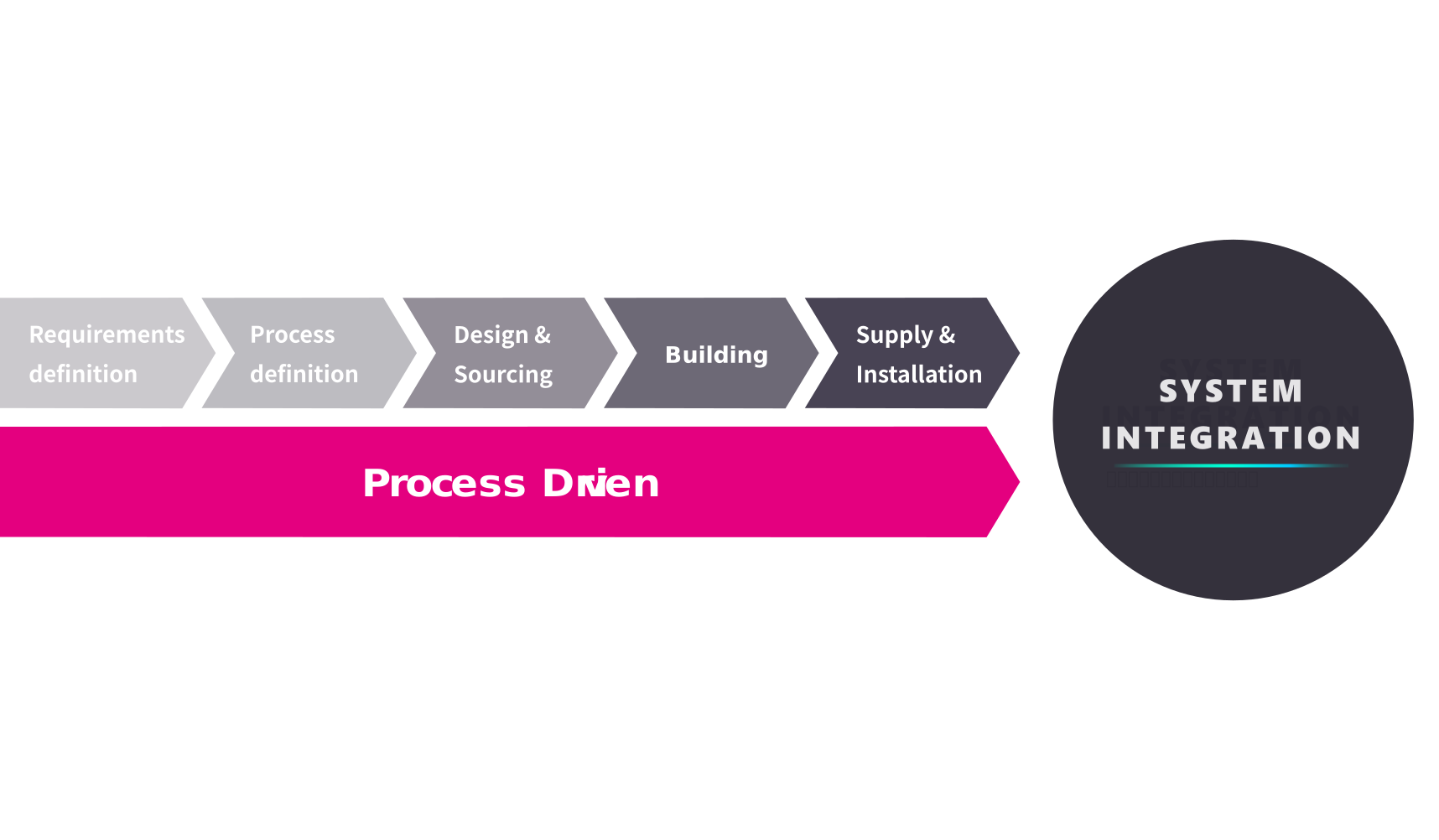
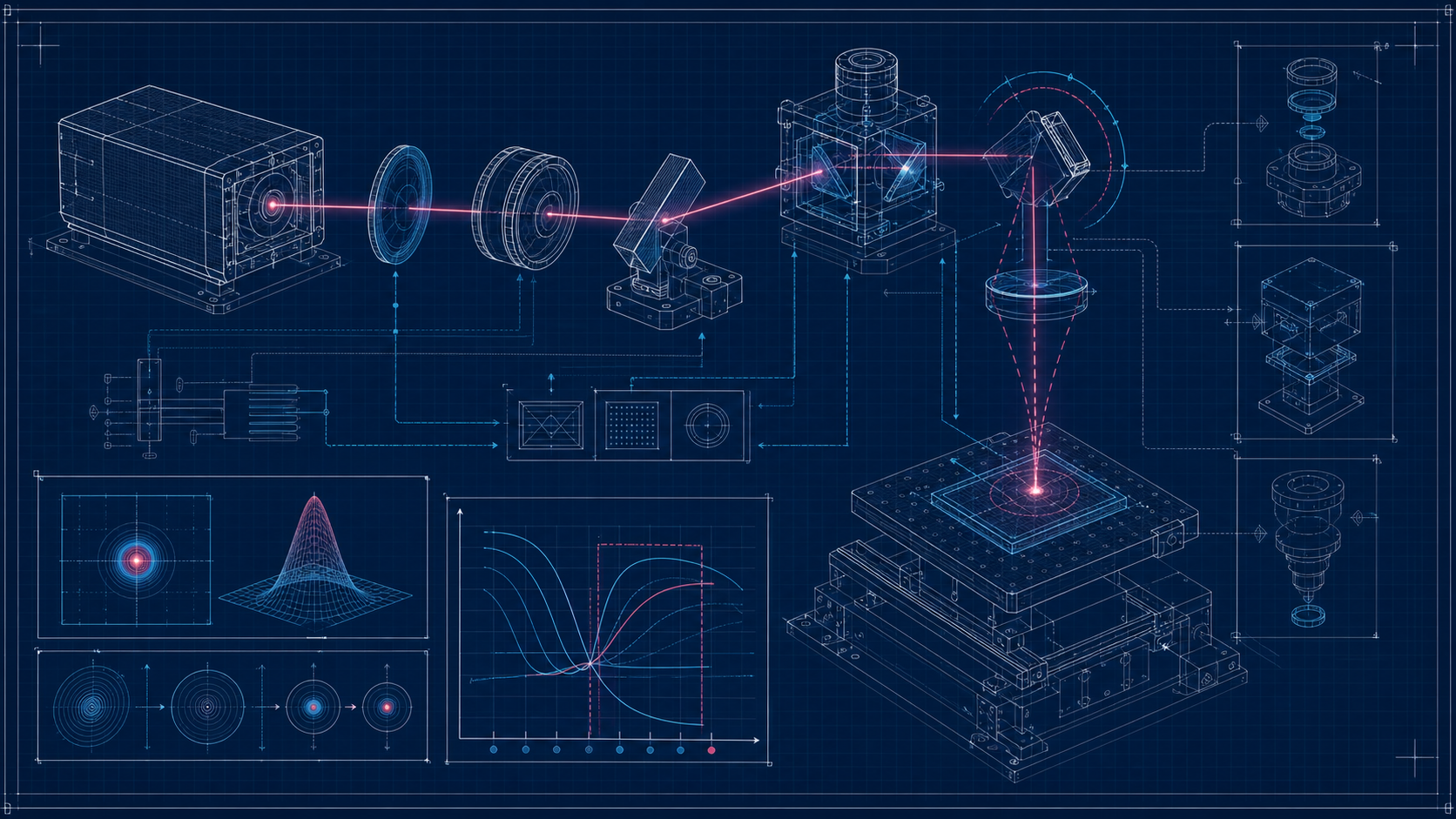
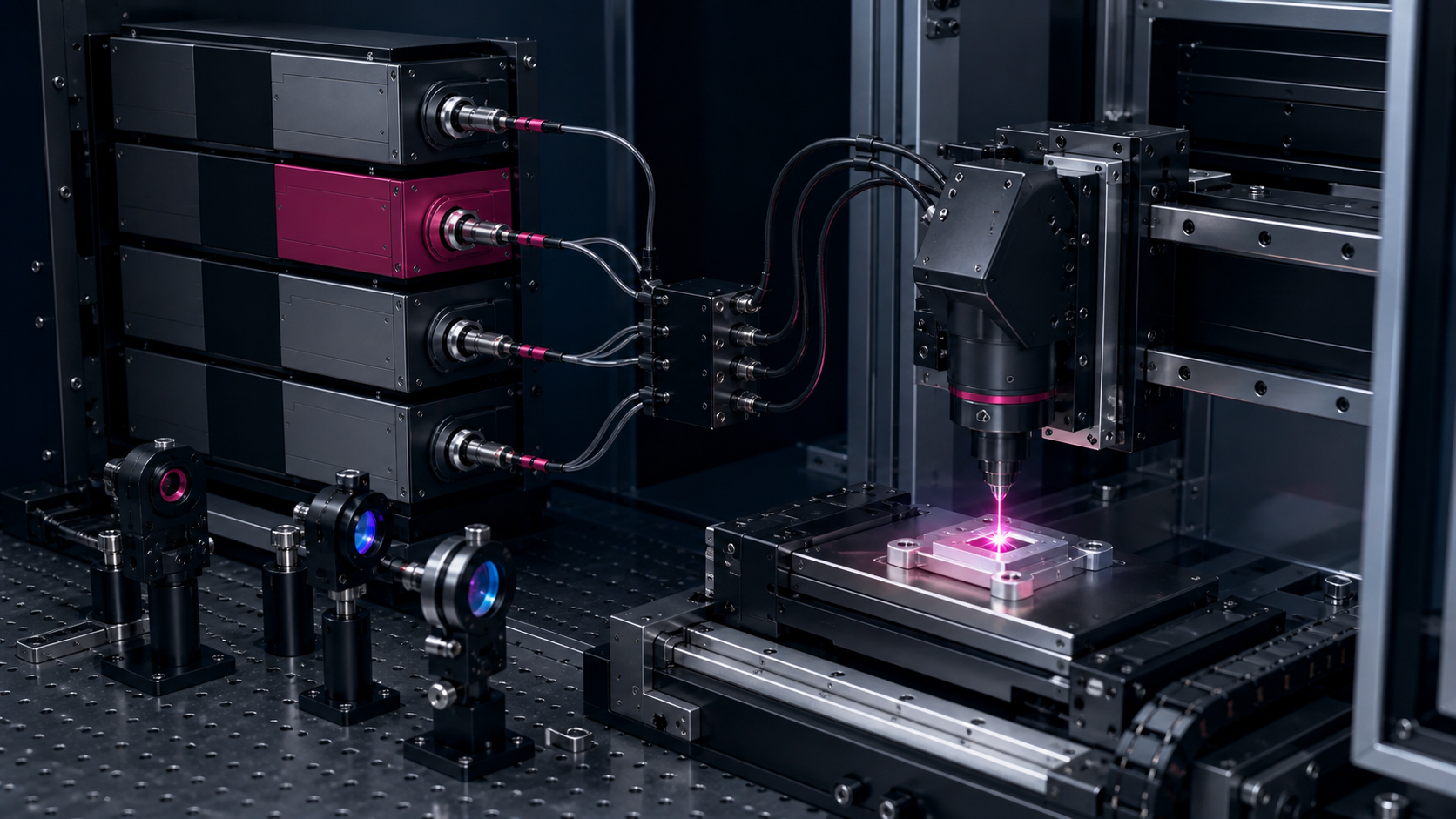
Quantec designs complete laser systems that integrate the oscillator, optics, galvo scanner, stage, and control architecture. A key part of that design philosophy is standardizing the control and interface layer so that oscillator changes, whether driven by model discontinuation, supply conditions, or cost optimization, require minimal process requalification.
The result is a system architecture that can absorb oscillator-level change without disrupting the production process above it. This is why Quantec does not design processes that depend on any one oscillator. The oscillator is a component. The process is the product.
Case: Enamel Wire Stripping
Stripping enamel insulation from copper motor windings is an absorption problem: infrared wavelengths reflect off copper, making reliable removal difficult without a two-step approach or a dual-wavelength configuration.
Quantec designed around the material response. UV wavelengths, especially 355 nm, absorb strongly into organic coatings, enabling clean removal without thermal damage to the copper substrate. The process was designed around that relationship, not around the availability of a specific oscillator. The resulting conditions can be verified across equivalent DPSS-UV sources from multiple manufacturers, making sourcing flexibility a design output rather than a side effect.
Case: SiC Scribing with Nanosecond Lasers
Scribing silicon carbide is often specified with picosecond or femtosecond lasers. Ultrashort pulse systems can deliver the required quality, but at capital costs several times higher than nanosecond systems and with a greater maintenance burden.
Quantec defined the quality requirements first: acceptable chipping, crack propagation limits, and die strength after singulation. It then developed nanosecond conditions validated against the same standards. For this material and this quality target, a nanosecond process could meet the specification. That design choice left the system buildable from a class of light source that is significantly more available, maintainable, and cost-stable over a production line’s life.
Questions That Reveal Oscillator Dependency
These questions identify where dependency has been built in:
- If the wavelength shifts by plus or minus 50 nm, does process quality fall outside acceptable limits?
- Does a plus or minus 20% change in pulse energy move the process outside its qualified range?
- How many days would requalification take if the current oscillator were replaced with an equivalent from a different manufacturer?
- If the current oscillator were discontinued today, how long would sourcing a replacement take?
Where the answers indicate tight dependency, the question is not which oscillator to buy next. It is whether the dependency can be reduced before it becomes a production problem.
Process design at Quantec does not start with the goal of specifying a particular oscillator. It starts with the production requirements: material, quality criteria, takt time, and the sourcing and service conditions the customer can sustain.
If you are evaluating long-run manufacturing stability, or if your current process has oscillator dependencies you would like to understand better, contact us.