




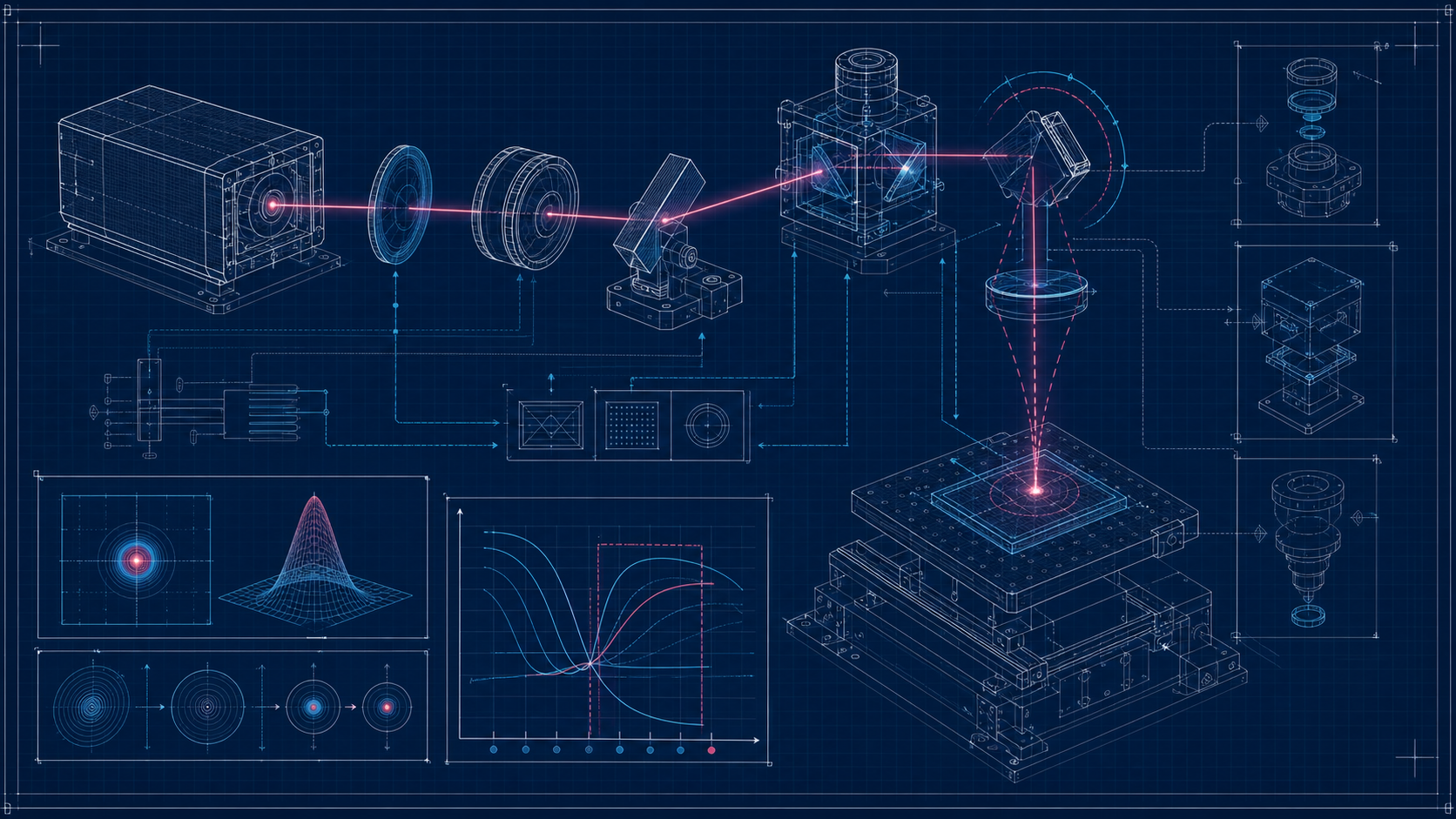
Why Step-and-Repeat Laser Processing Creates Hidden Manufacturing Costs
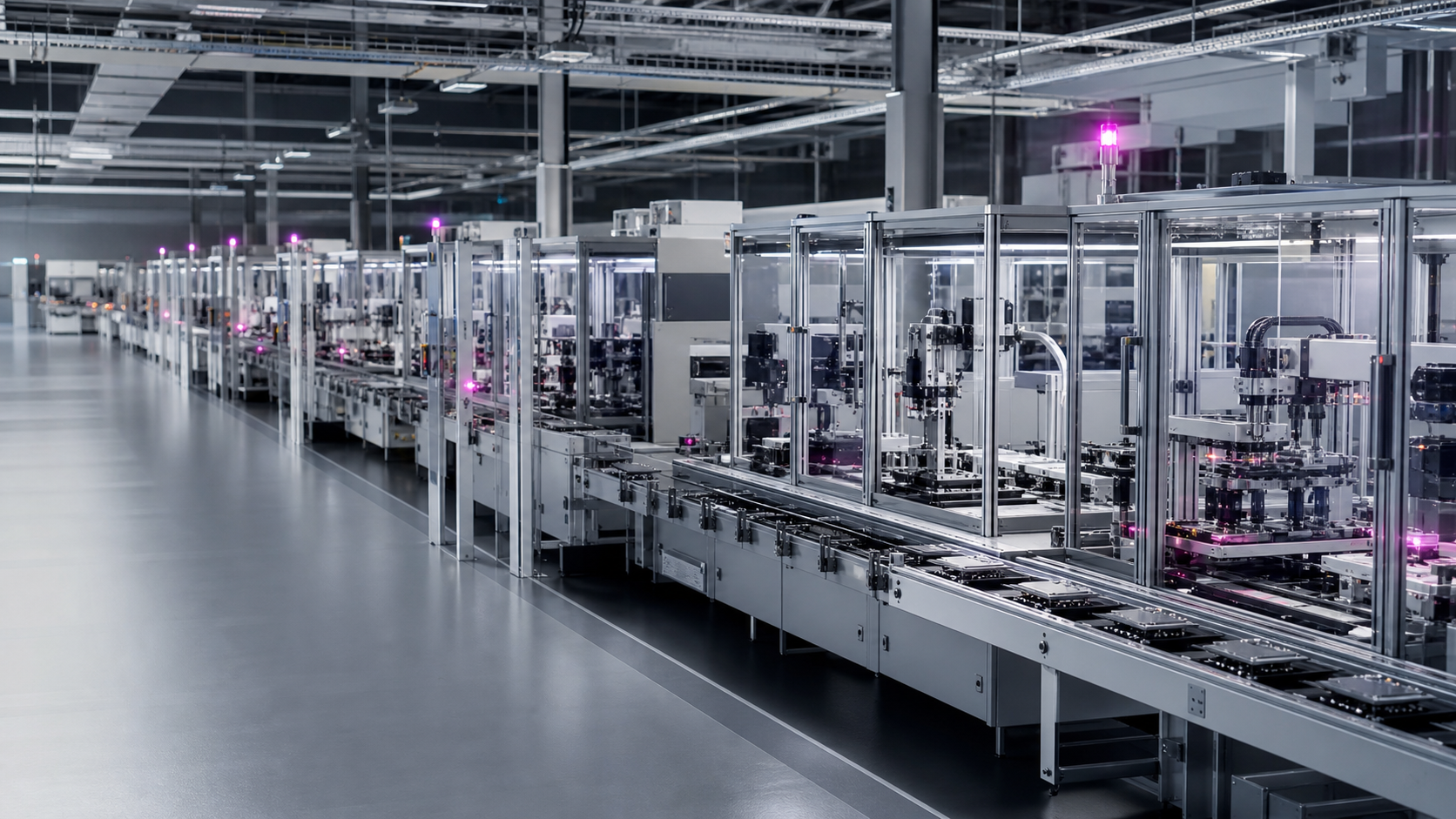
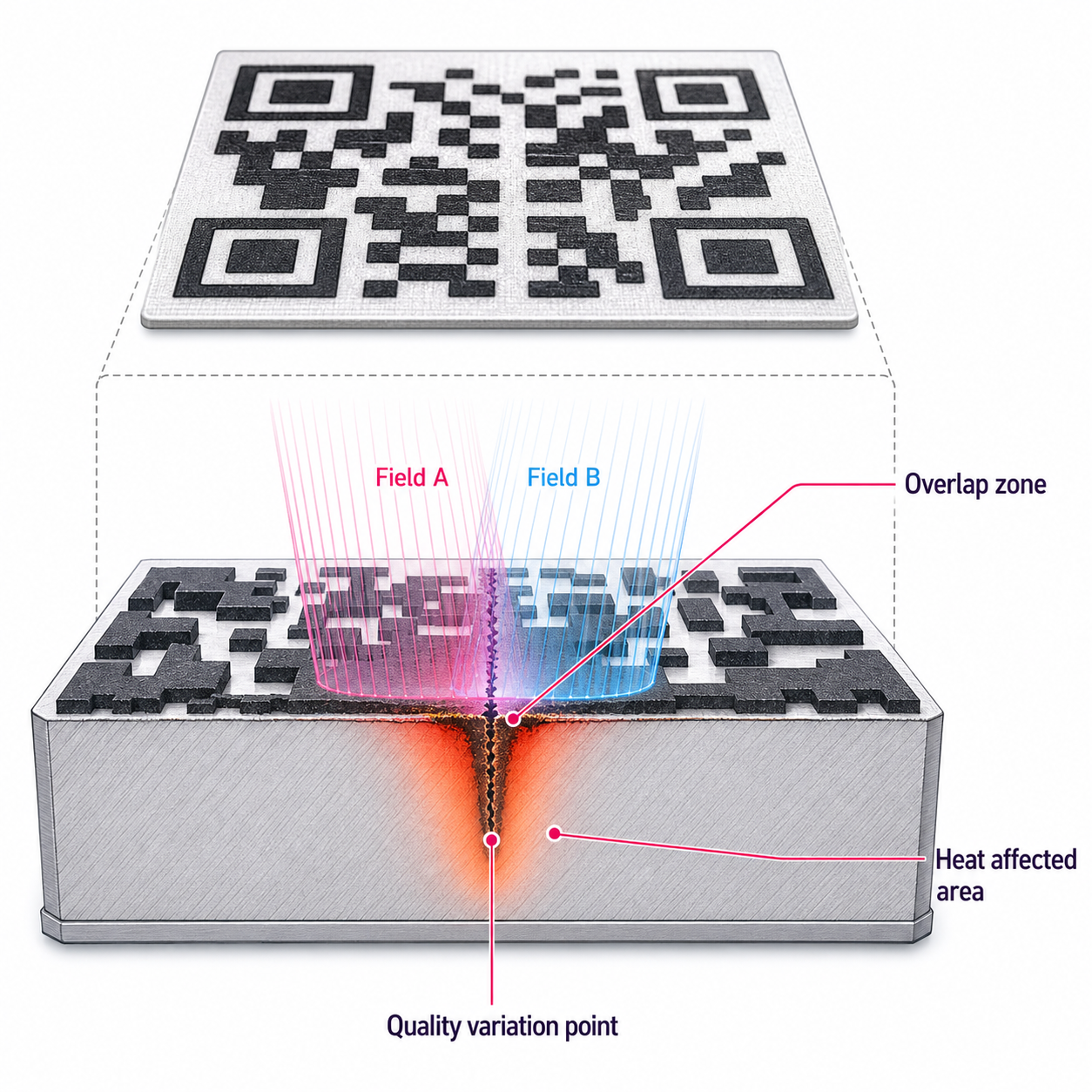
More than a visible boundary
When the laser field is too small, step-and-repeat processing extends the working area by moving the workpiece across multiple fields. The resulting burden is not limited to the appearance of a seam.
Stops, repositioning, correction, overlap, inspection for heat marks or uneven results, and possible rework accumulate. Each burden may appear small, but production volume turns it into takt-time and yield pressure.
Large-area processing changes quality and productivity together
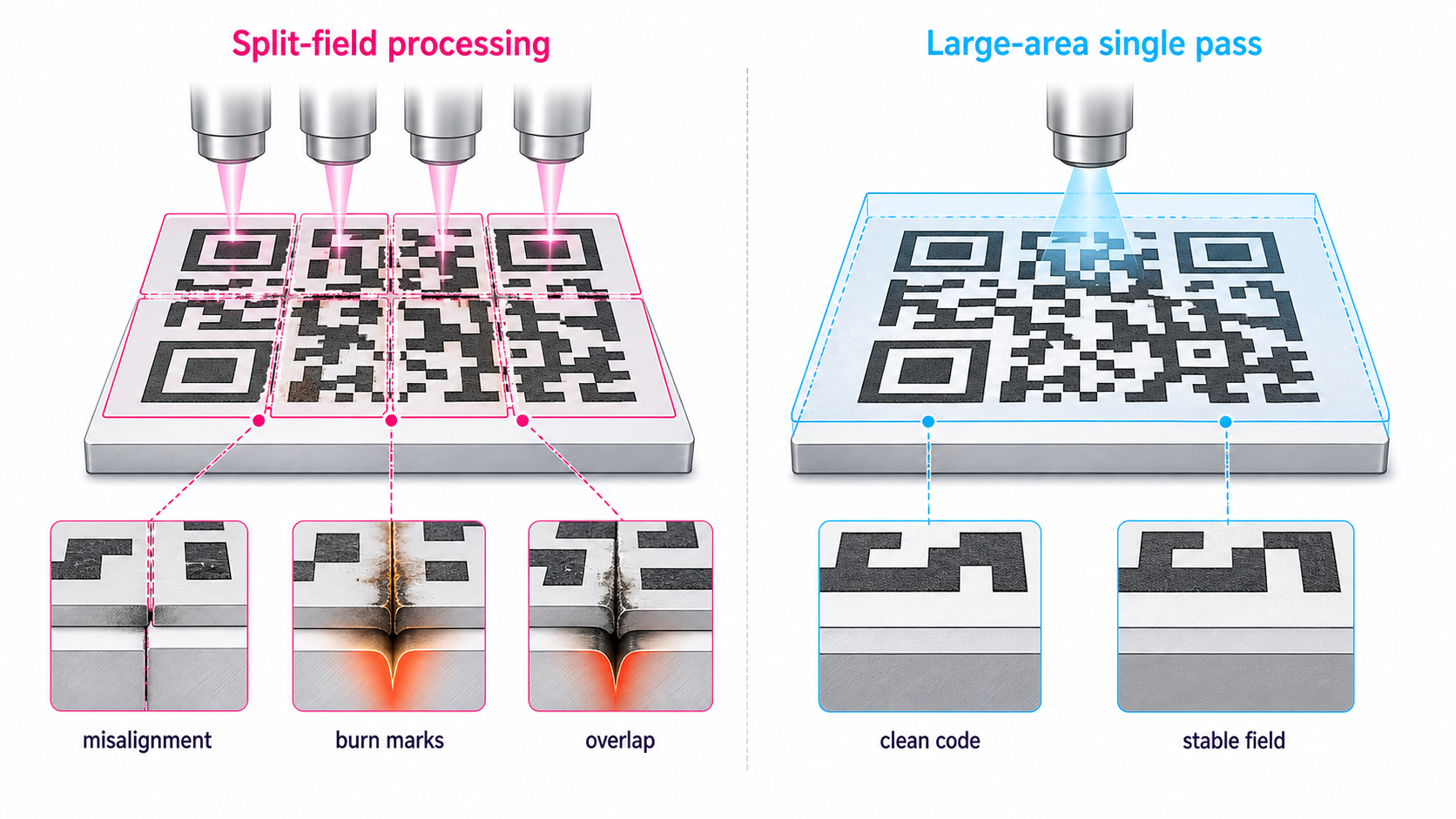
In touch-panel manufacturing and similar processes requiring large-area laser processing, split-field processing causes quality deterioration and productivity loss at stitched boundaries. Quantec designed a configuration that handles the required area in a single operation to address this challenge. Field size is not just a machine specification. It is a production-system variable.
- Fewer stops and repositioning steps stabilize takt time
- Correction and inspection burden caused by boundary regions is easier to manage
- The risk of burning and uneven results in overlap areas is easier to reduce
- Productivity improvement
The Required Field Size Is a Production Process Design Requirement, Not a Machine Specification
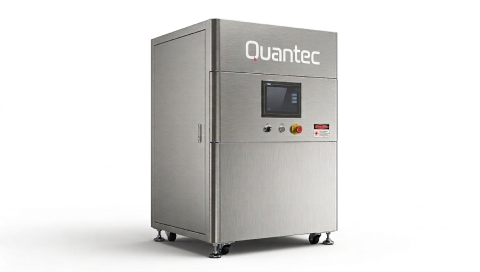
A system that handles the necessary area in one operation can stabilize quality and shorten the process. PICTURA, Quantec’s Laser Platform, is designed for manufacturable large-area laser processing.