



Why Laser Source Independence Matters in Industrial Manufacturing
When manufacturers evaluate a laser system, proposals often start from the light source. “Here is what our fiber laser can do.” “Let us run trials at this pulse width.” The approach seems practical, but it carries a structural bias.
Oscillator manufacturers naturally design proposals around their own light sources. That is not necessarily intentional, but the result is that processes get qualified on specific oscillators and embedded in production equipment. The customer gets a working system. They also get a long-term dependency on a particular light source, and that dependency compounds quietly over the following decade.
What manufacturers actually need is not a specific laser. They need processing results. And over a production system’s life, those results are most reliably delivered by designs that do not depend on a single oscillator configuration remaining available, affordable, and maintainable.
Three Risks of Oscillator-Dependent Design
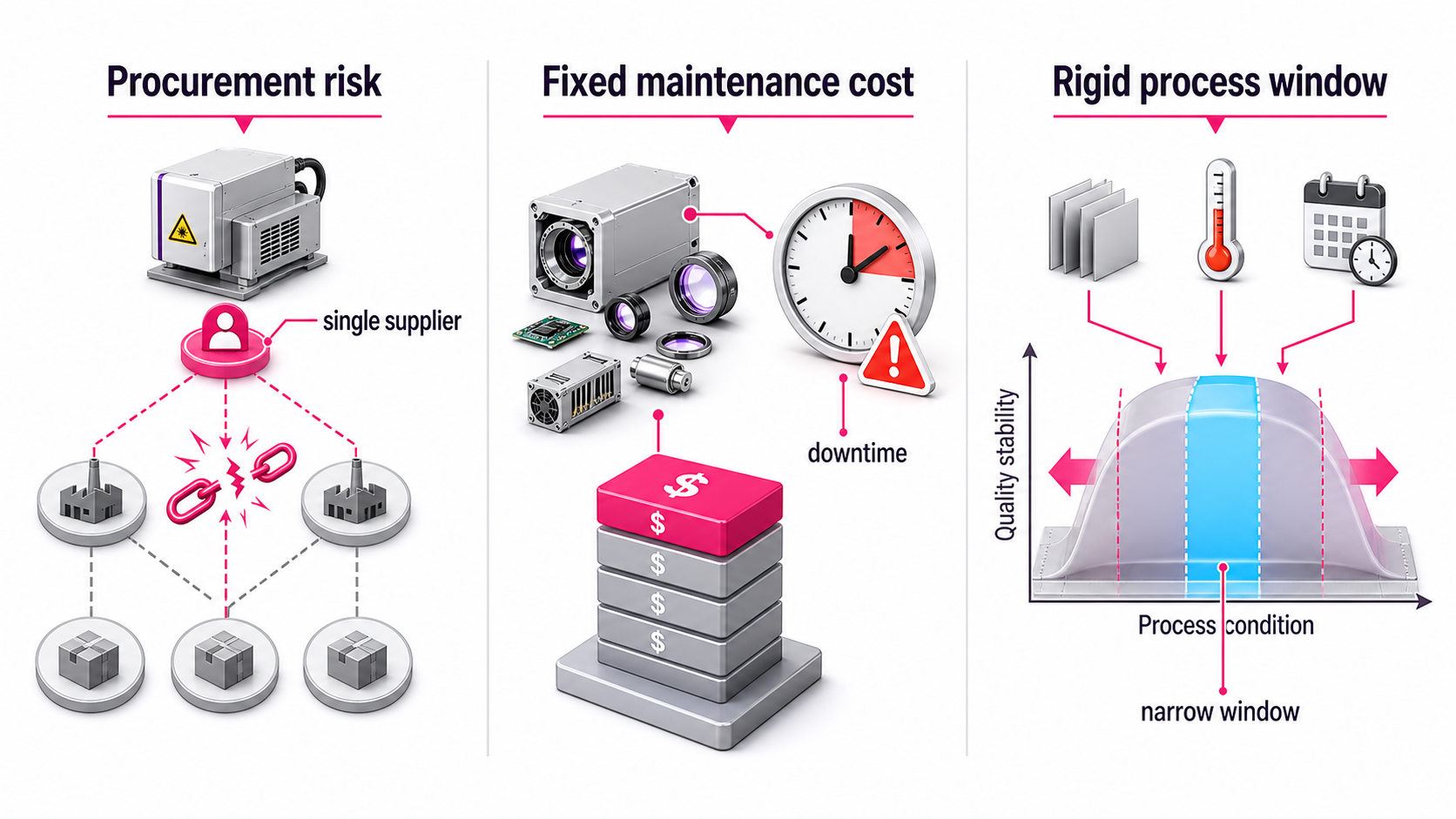
Sourcing concentration and supply chain exposure
A process qualified to a specific oscillator is exposed to whatever happens to that product line. Long-run production lines are expected to operate for ten to twenty years. Oscillator product lines evolve on shorter timescales. And increasingly, the optical and semiconductor supply chains that underpin laser components are subject to geopolitical risk.
Concentration in a specific country or supplier network introduces the possibility of supply disruption that no purchasing team can fully hedge.
Fixed maintenance costs
When a process is tied to a specific oscillator family, switching to a next-generation model or a lower-cost alternative triggers condition re-verification: downtime and validation cost, not just parts cost. Competitors who can move their laser supply chain to optimize costs have a structural advantage. A process locked to a single configuration cannot capture that benefit.
Compromised processing quality from limited light source selection
The fundamental problem with oscillator-dependent design is that the range of laser conditions available for a given material and processing goal is narrowed from the design stage. In laser processing, the combination of wavelength, pulse width, output power, repetition rate, and beam quality significantly affects processing quality, thermal influence, takt time, yield, and running cost. However, when a system or process is designed around a specific oscillator, process development tends toward the question of “how far can we get with the existing oscillator?” rather than “which light source is optimal for the goal?”
As a result, even when a more suitable wavelength or pulse condition exists for a given material, it cannot be adopted — and compromises appear in processing quality, takt time, thermal influence, or cost. Even when the initial evaluation appears to succeed, this can lead to unstable yield in production conditions, insufficient processing speed, or unacceptable peripheral damage.
This is what oscillator dependency does: it causes process window rigidity. A narrow process window does not simply mean vulnerability to parameter variation. It means there are few available technical options for the processing goal — and limited room to reach the optimal condition.
Design From Process Requirements, Not the Oscillator
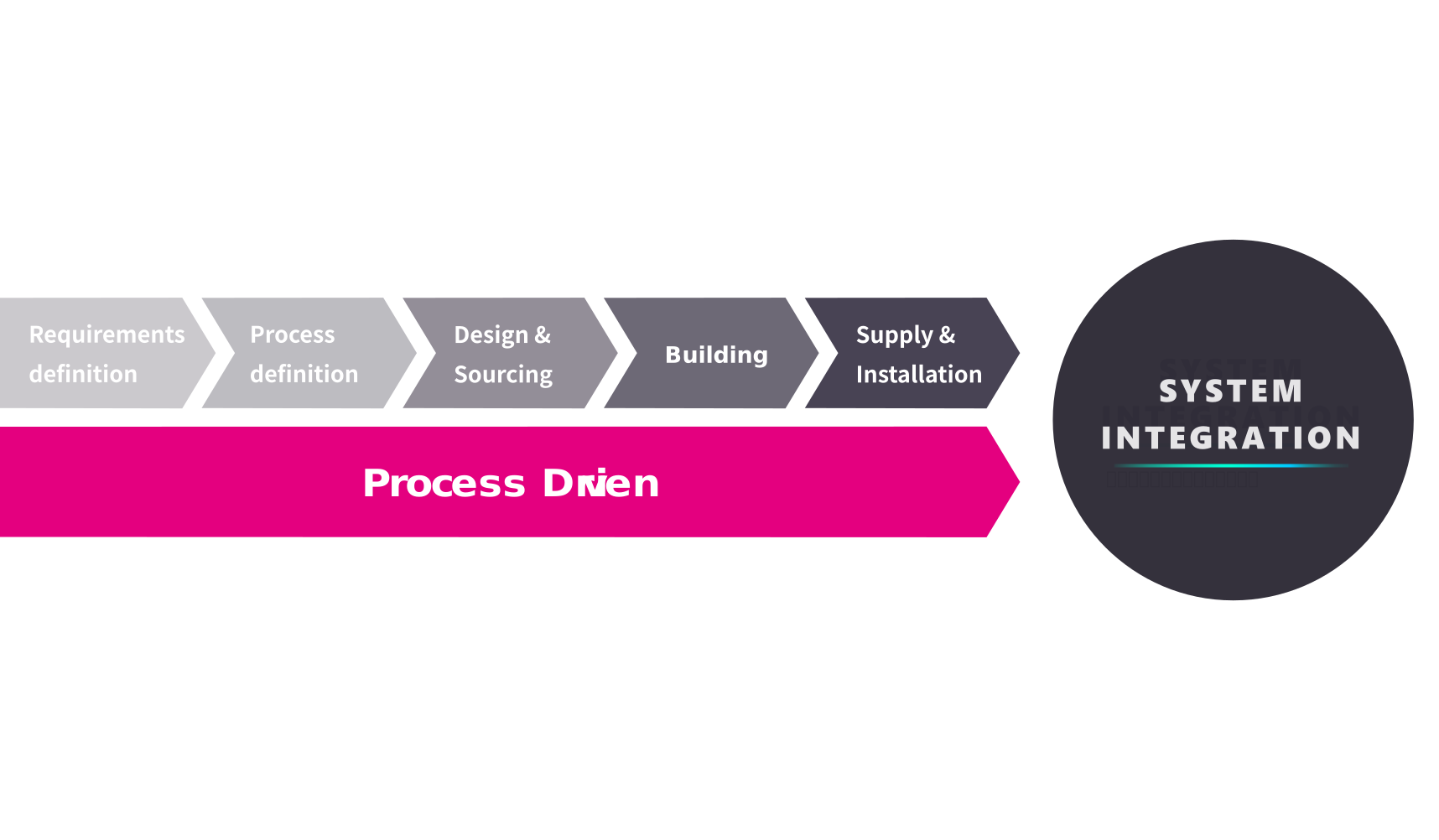
Oscillator-independent design does not mean any oscillator can be used interchangeably. What matters is designing not by fitting the system to a specific manufacturer’s oscillator model number, but by working backward from the required processing result and production conditions.
For example: what level of processing quality is required? How much thermal influence must be suppressed? Can the required takt time for the production line be met? Starting from these conditions, wavelength, output, pulse width, optics, and control method are combined accordingly.
This approach makes it easier to reconsider the necessary configuration for the processing goal even when the oscillator manufacturer or product generation changes. Conversely, if a process is built around a specific oscillator, when that light source becomes unavailable, not only the equipment configuration but also the processing conditions, quality assurance, and production validation all require review.
The essence of oscillator-independent design is not to ignore hardware. It is to treat hardware as an implementation element subordinate to the processing goal.
Quantec’s Process-First System Design
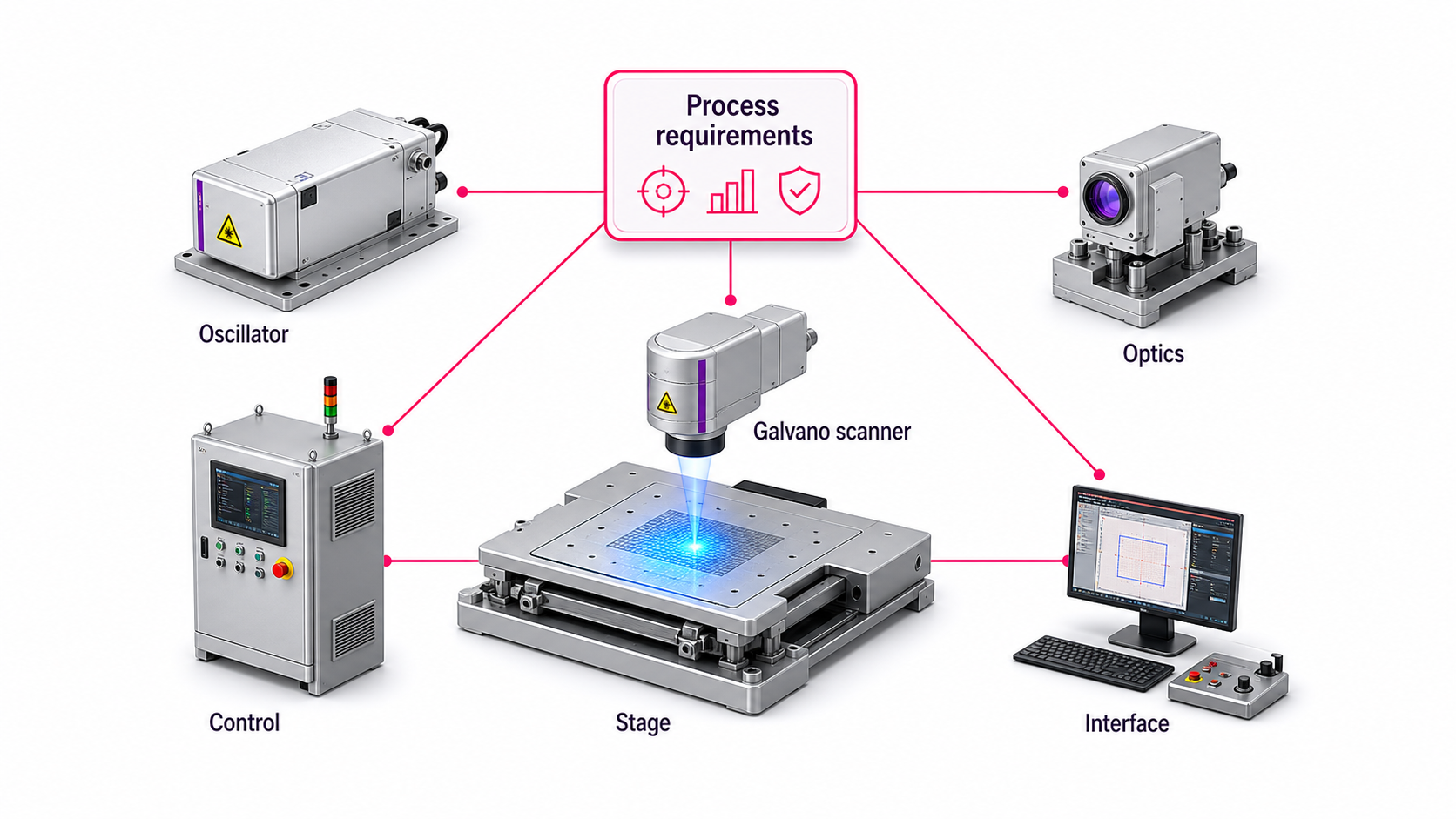
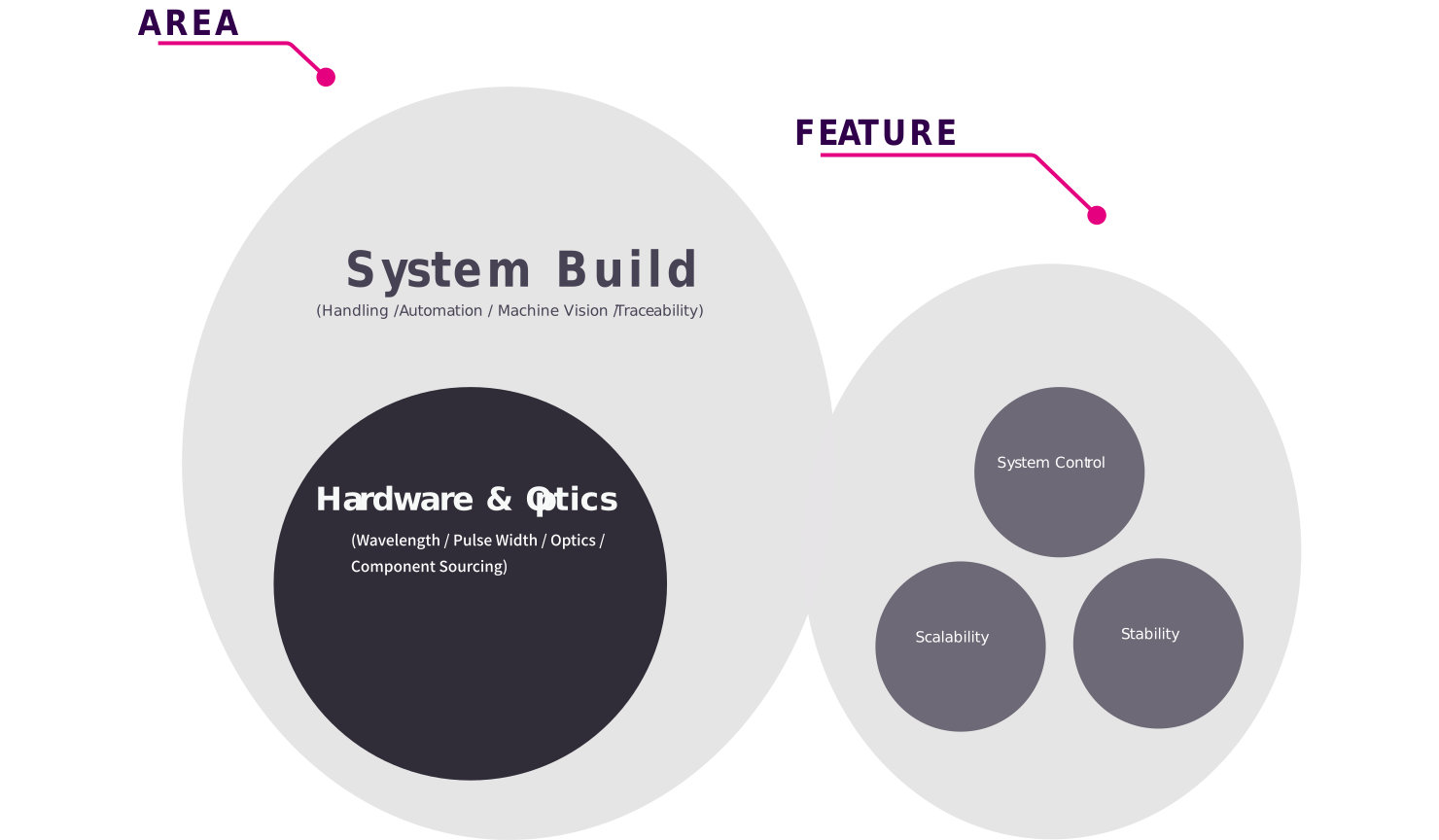
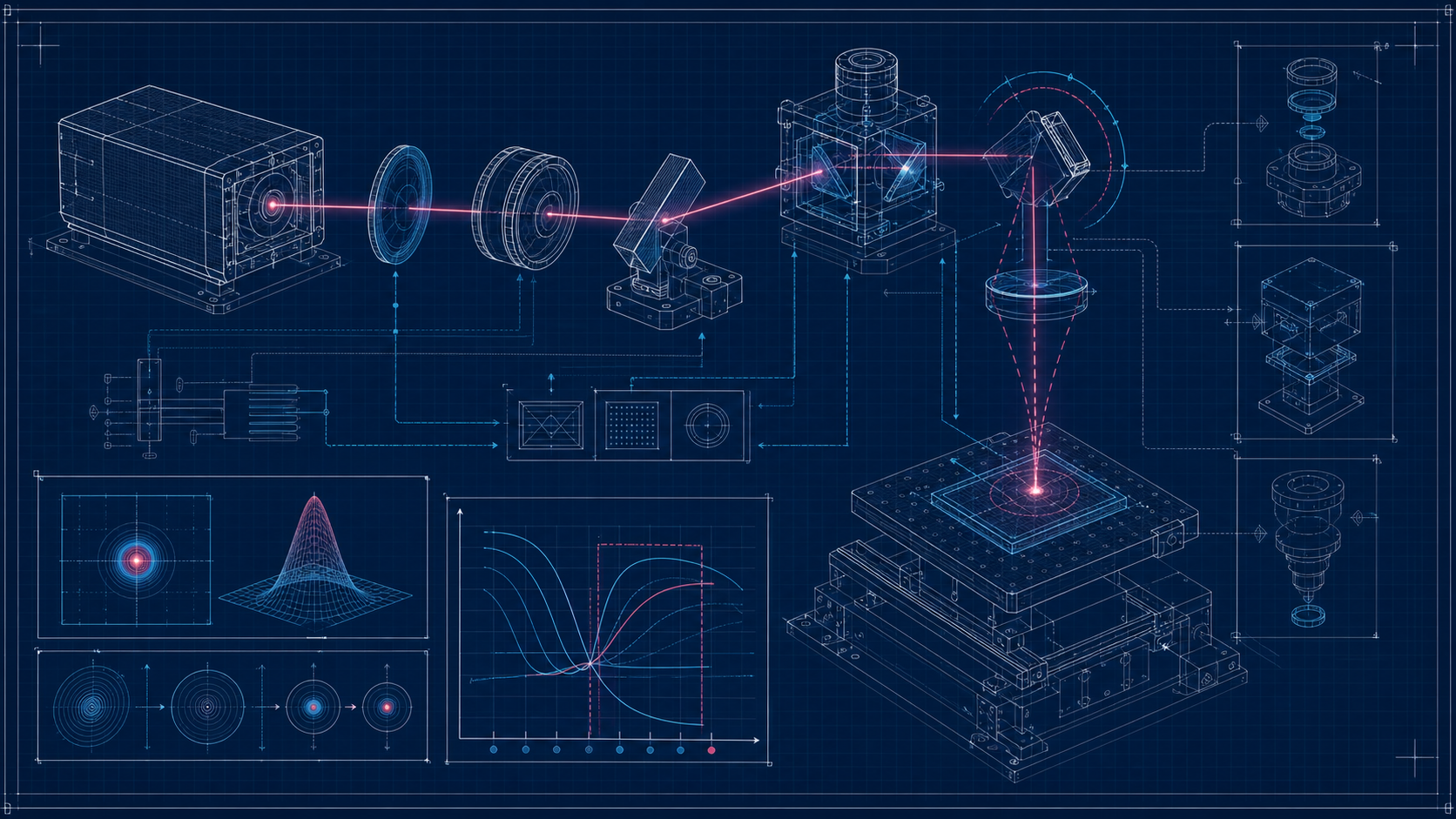
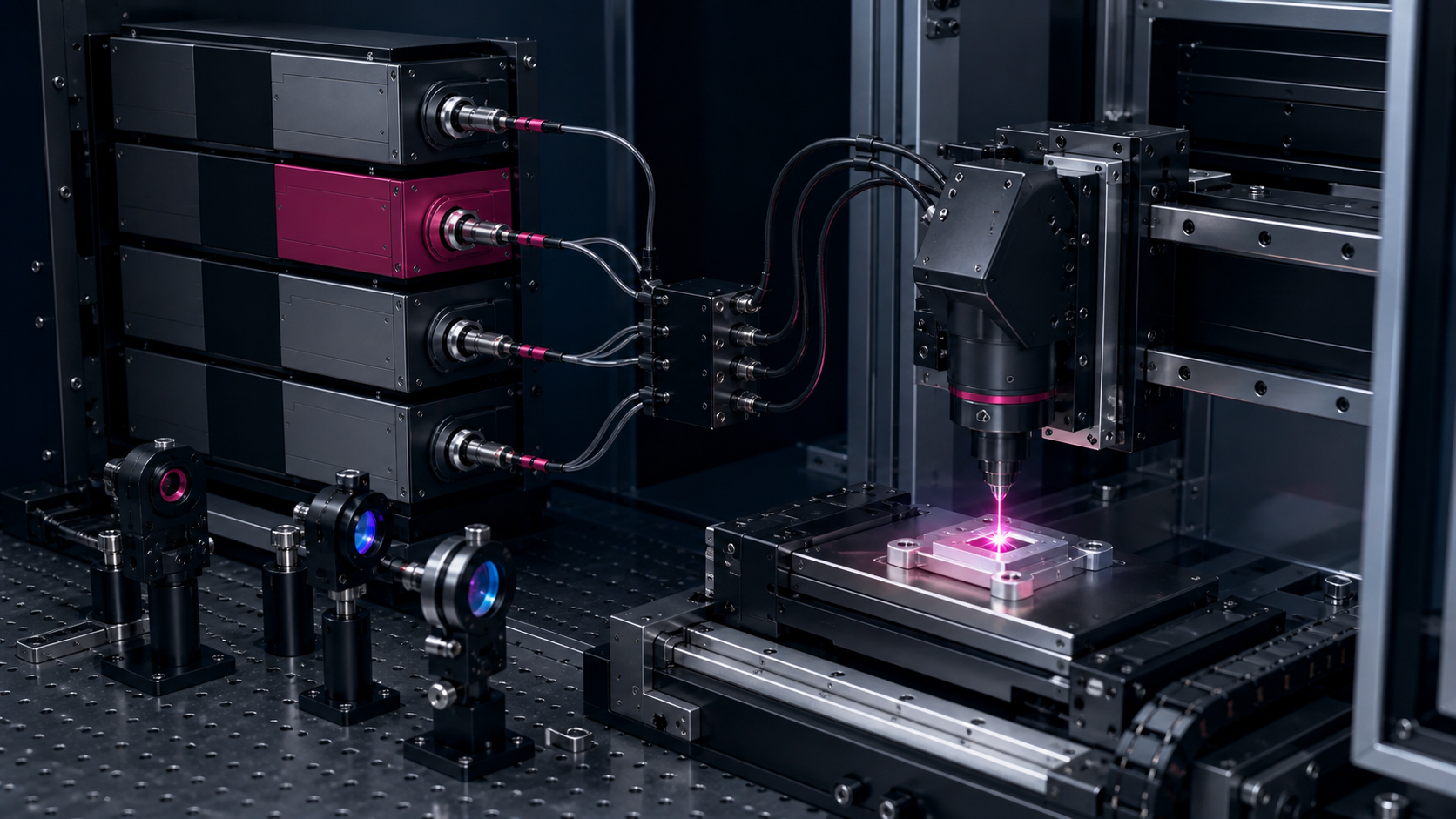
Quantec designs complete laser systems by first defining the required light source specifications from the material and processing goal — then integrating the oscillator, optics, galvo scanner, stage, and control system into the overall system design, rather than starting from a specific manufacturer’s oscillator.
The oscillator is an important component in laser processing, but what matters to the customer is not the oscillator itself — it is the ability to reproducibly deliver the required processing result under production conditions.
To that end, Quantec works with multiple oscillator manufacturers and optical component suppliers to evaluate the most rational configuration for the target material, quality requirements, takt time, installation cost, and maintainability.
Of course, changing an oscillator requires re-evaluation of processing conditions. Oscillator-independent design does not mean oscillators can be swapped without verification. It means not starting from a specific manufacturer or model number, but instead holding the position of being able to select the optimal light source configuration starting from the processing goal.
- A business model that partners with and sources from multiple oscillator manufacturers
- Integrated system optimization across oscillator, optics, galvo scanner, stage, and control
- Standardized control and interface design
These three elements allow the design to reduce dependency on any specific manufacturer or model, making it easier to evaluate alternative configurations when faced with model changes or sourcing risk.
The following cases show how Quantec designs backward from the required processing outcome, without assuming a specific oscillator.
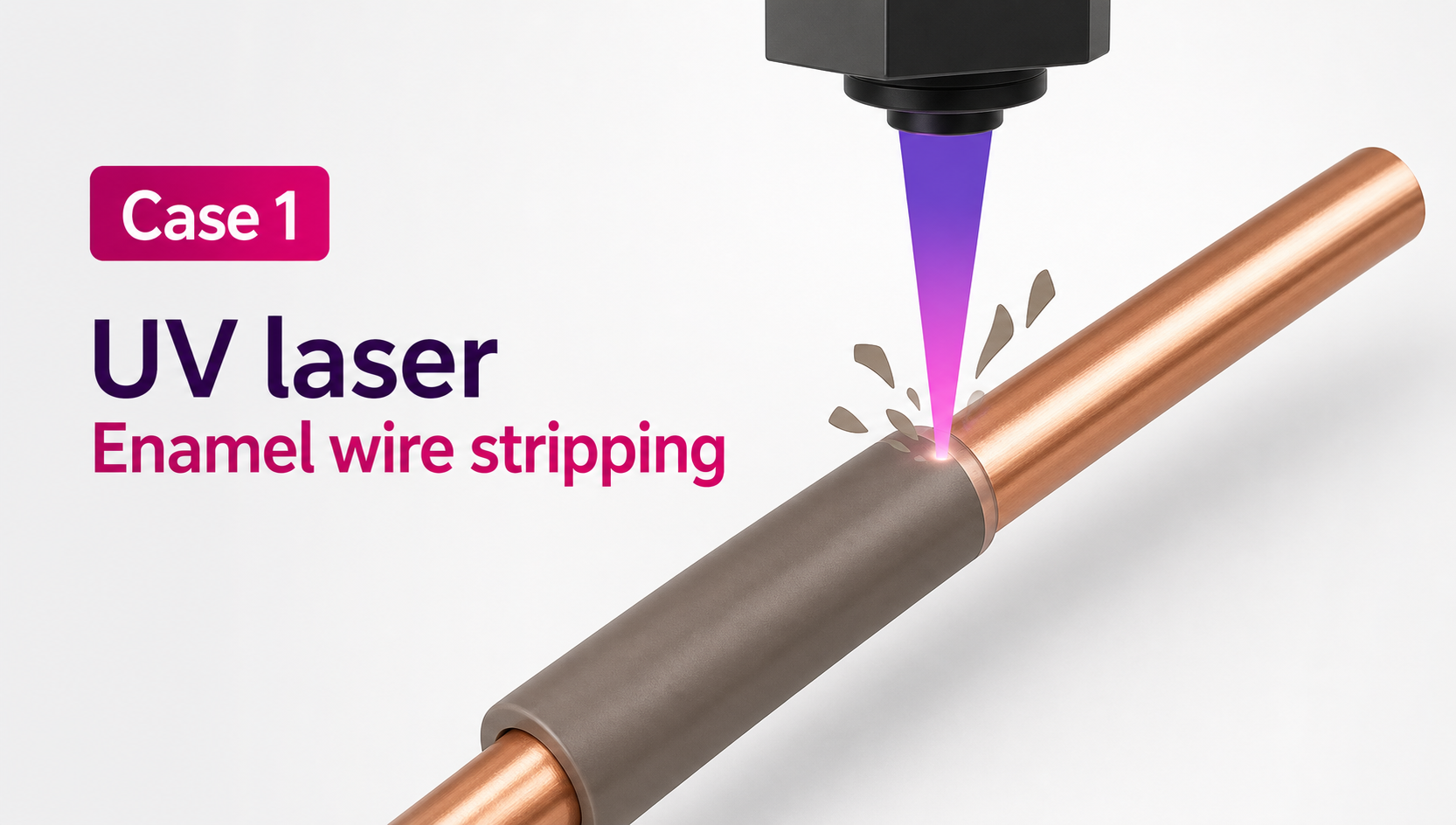
Case 1: Enamel Wire Stripping
Stripping enamel insulation from copper motor windings is an absorption problem: infrared wavelengths have high reflectivity off the copper base material, making reliable removal difficult without a two-step or dual-wavelength approach in some cases.
Quantec designed around the material response. UV wavelengths, especially 355 nm, absorb strongly into organic coatings, enabling clean removal without thermal damage to the copper substrate. The process was designed around that relationship, not around the availability of a specific oscillator. The resulting conditions can be verified across equivalent-class UV sources from multiple manufacturers for comparison, making sourcing flexibility a design output rather than a side effect.
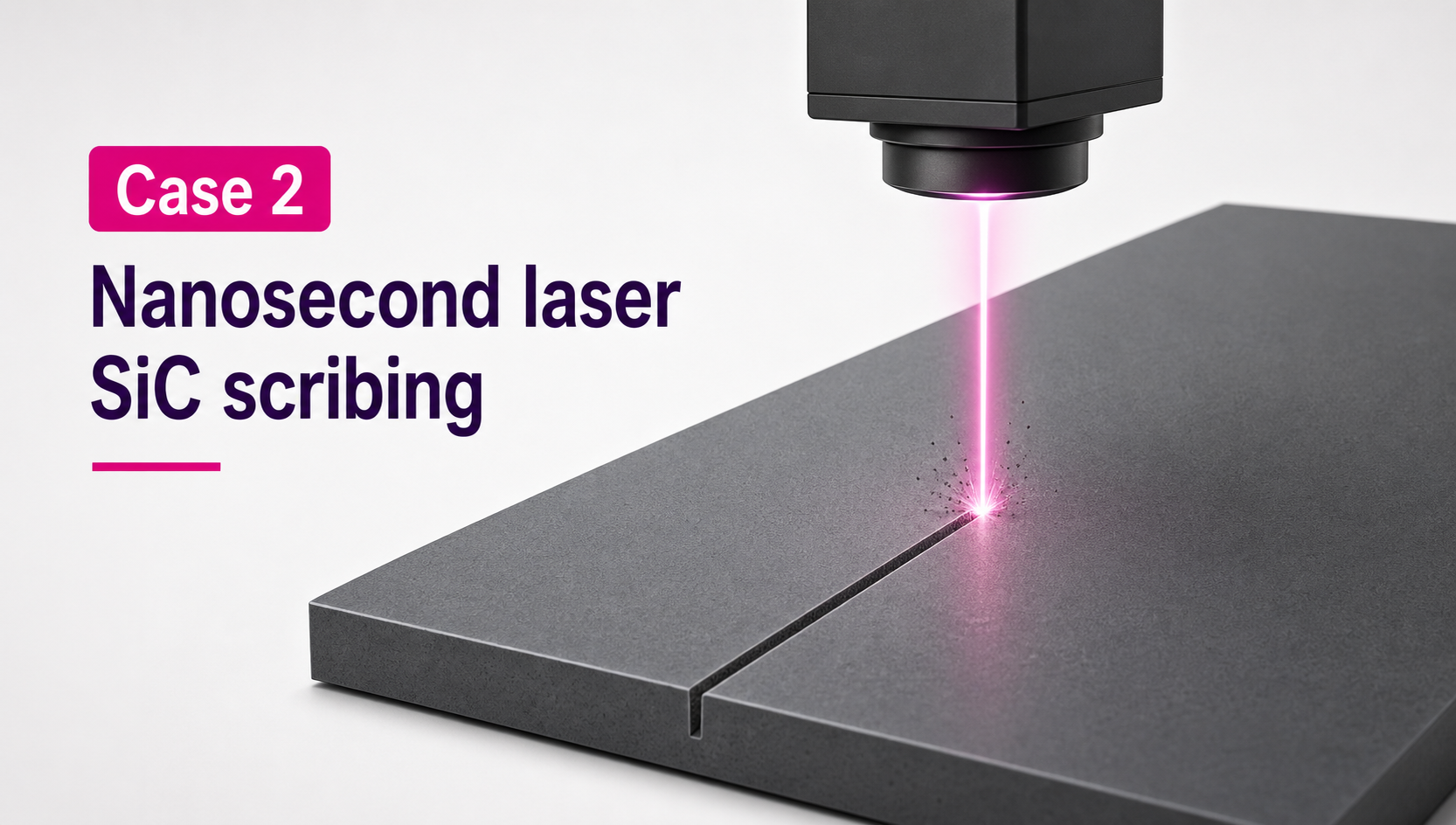
Case 2: SiC Scribing with Nanosecond Lasers
Scribing silicon carbide is often specified with picosecond or femtosecond lasers. Ultrashort pulse systems can deliver the required quality, but at capital costs several times higher than nanosecond systems and with a greater maintenance burden.
Quantec defined the quality requirements first: acceptable chipping, crack propagation limits, and die strength after singulation. It then developed nanosecond conditions validated against the same standards. For this material and this quality target, a nanosecond process could meet the specification. That design choice left the system buildable from a class of light source that is significantly more available, maintainable, and cost-stable over a production line’s life.
Questions That Reveal Oscillator Dependency
The following questions can help identify how dependent your laser system is on a specific oscillator.
- Can the reason for selecting the current oscillator be explained in terms of material properties and processing goals?
- Is there a history of comparing alternatives from other manufacturers or closely matched specifications?
- If the oscillator model changes, which evaluation items need to be re-verified?
- If the current oscillator is discontinued or becomes long-lead, can an alternative be secured?
- Are processing conditions or equipment configuration fixed on the premise of a specific manufacturer’s specifications?
If these questions cannot be answered, that process may be strongly dependent on a specific oscillator.
What matters in oscillator-independent design is not “which oscillator to buy next.” It is designing in enough room to work backward from the material and processing goal and select the optimal light source configuration.
If you are evaluating long-run production stability or looking to reassess oscillator dependency in your current process, we welcome your inquiry.