



Why Mono-Material Tablet Packaging Requires Precision Film Processing
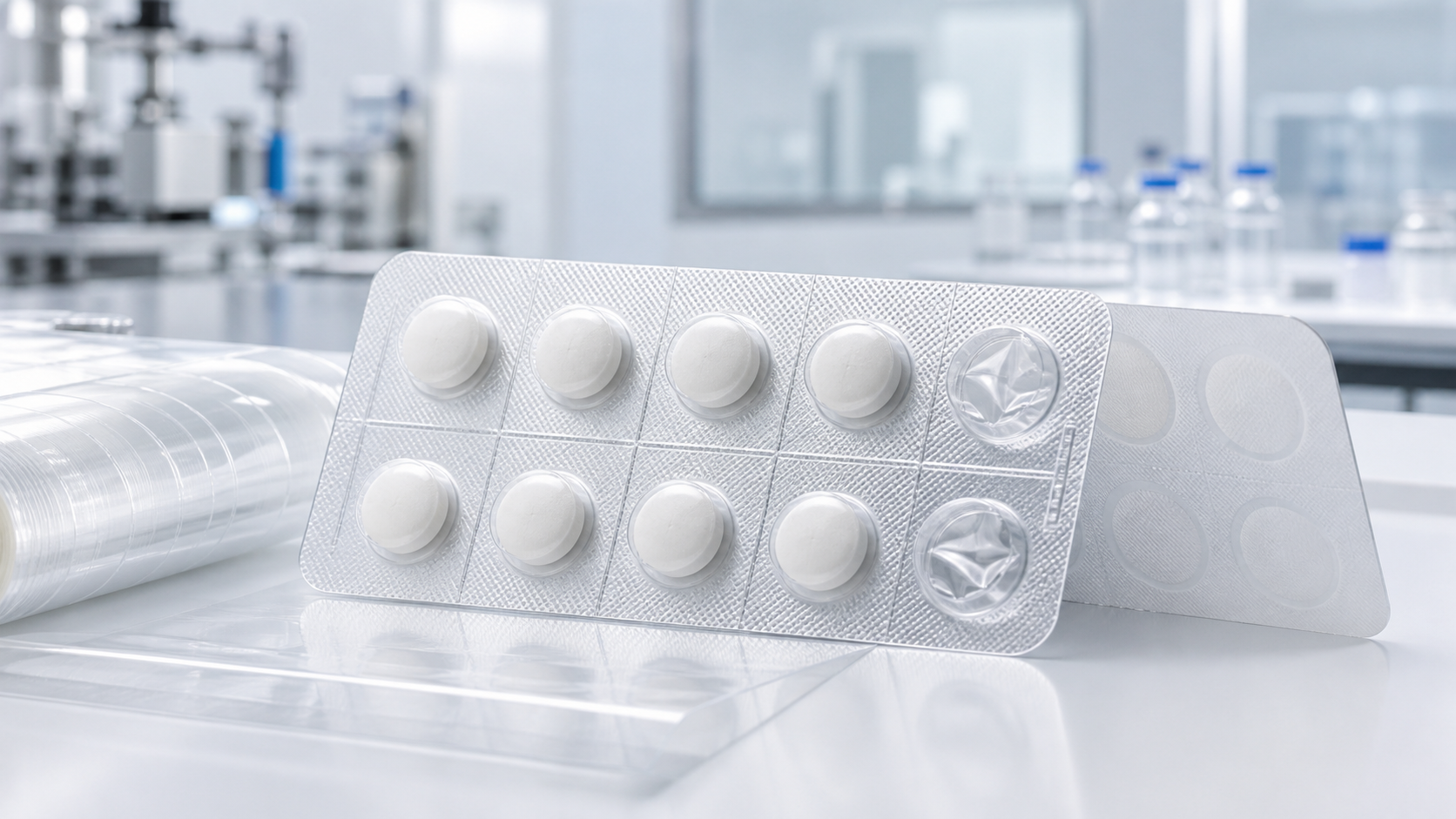
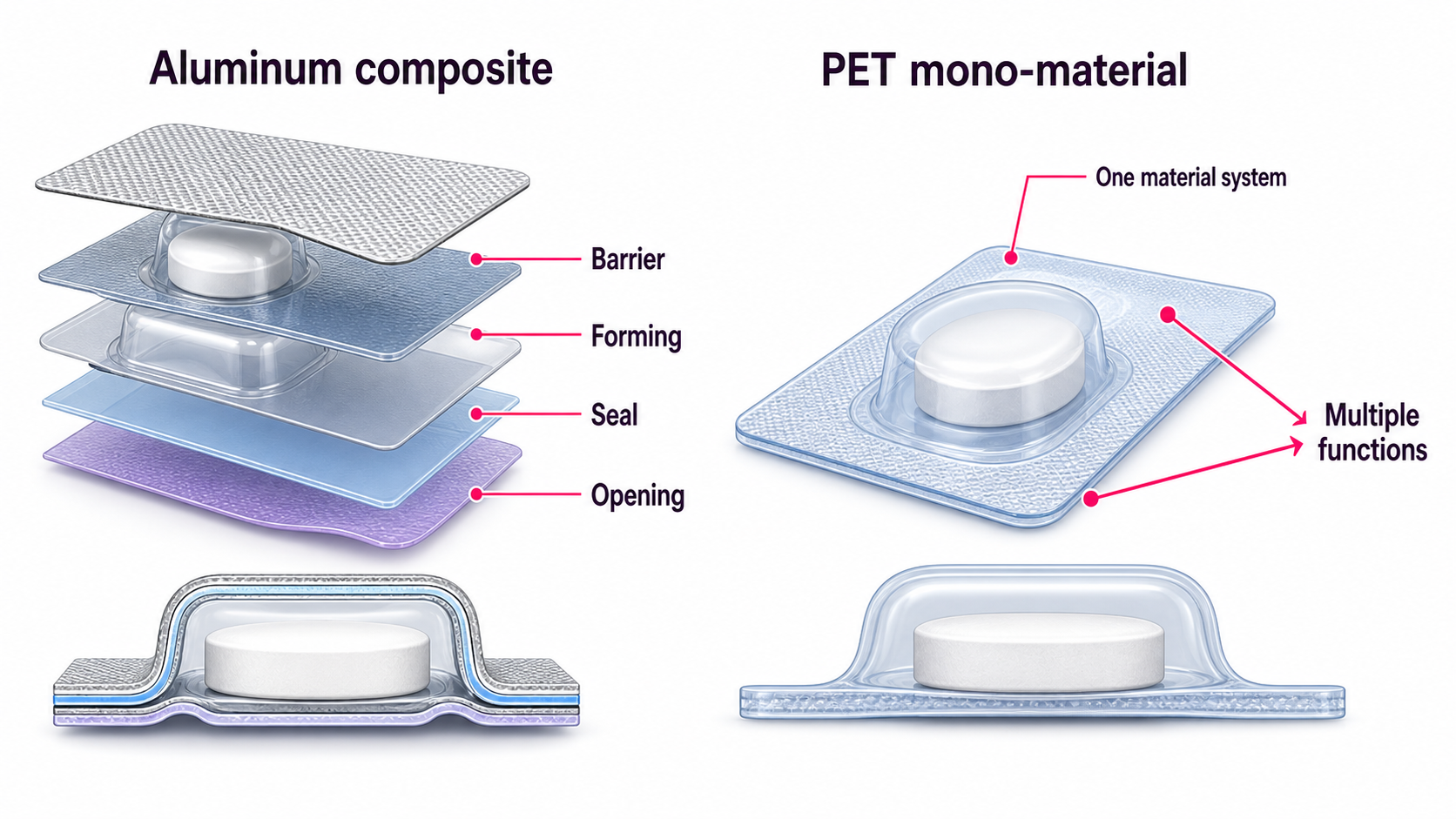
Mono-material packaging for tablet applications cannot be achieved simply by substituting aluminum foil with a single material such as PET. In conventional composite packaging, multiple materials divide responsibility for moisture resistance, light blocking, sealing, and easy opening.
In mono-material packaging, simplifying the material composition means these functions must be built into film design and processing precision. In other words, the success of mono-material conversion depends not only on material selection but significantly on the reproducibility of precision film processing.
The Functions Required of Tablet Packaging Are Not Simple
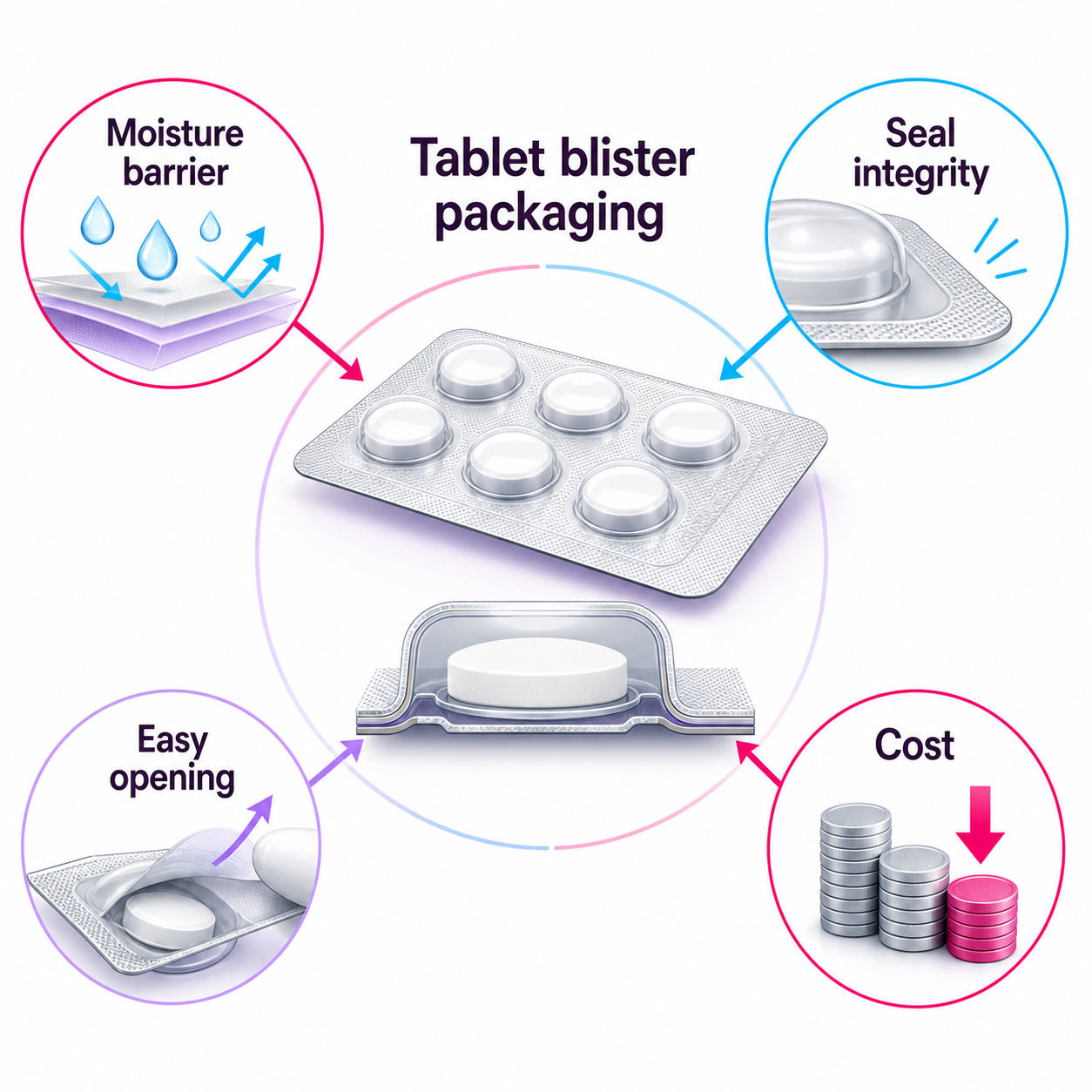
Tablet packaging must simultaneously provide moisture resistance to protect contents from humidity, sealing performance to prevent tearing during transport and storage, and easy opening for consumers.
In conventional aluminum composite packaging, the aluminum foil provides high barrier performance while the resin film provides formability and ease of handling. In PET mono-material structures, however, these functions must all be achieved within the same material system.
Easy Opening and Moisture Resistance Tend to Trade Off
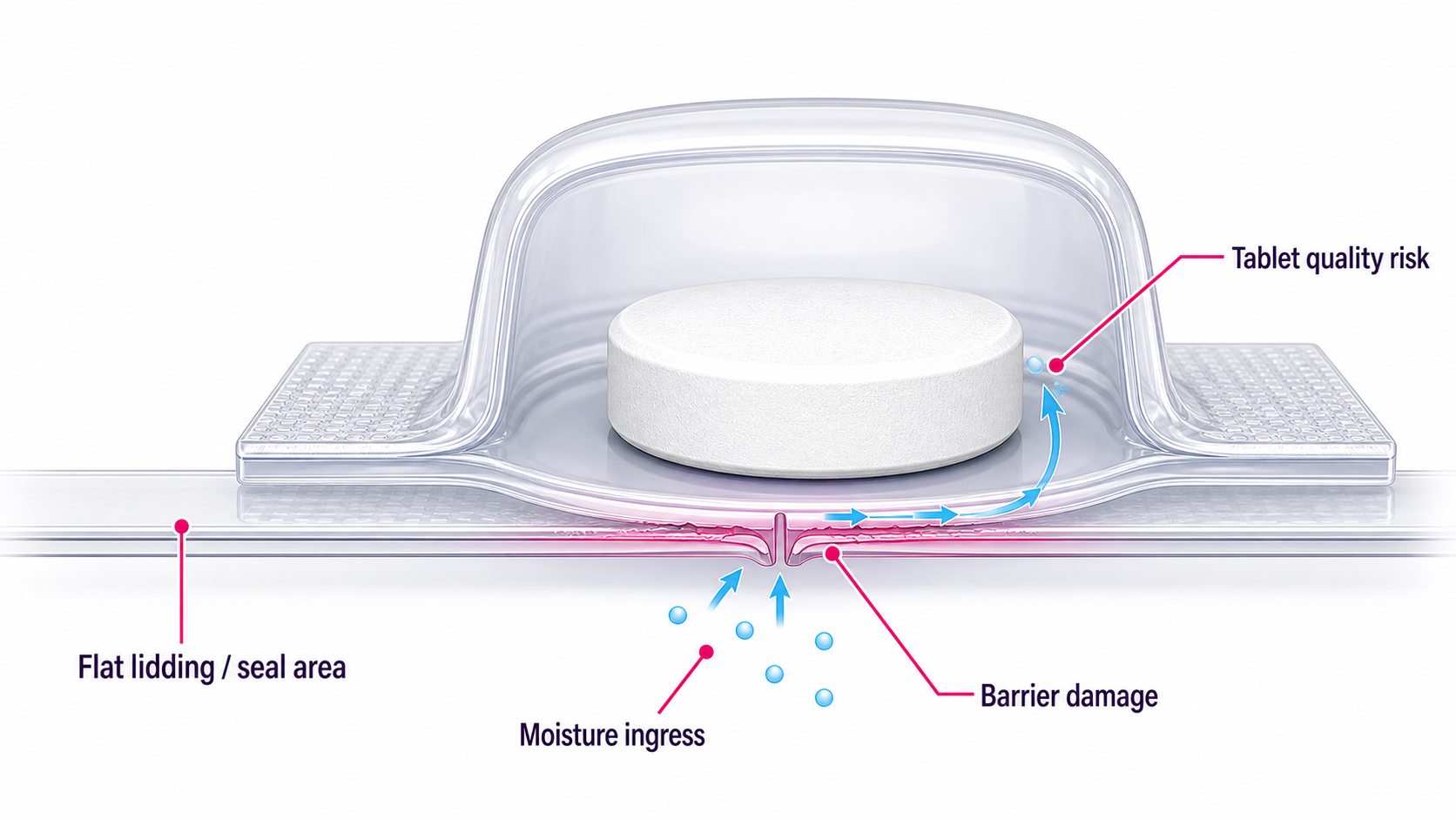
When creating scoring in resin film to make tablets easier to remove, controlling the processing depth becomes critical.
If the scoring is too deep, the film becomes prone to tearing during transport or storage. Too shallow, and it becomes difficult to open. Furthermore, if the scoring affects the sealing or barrier layer, moisture resistance and sealing performance can decrease, potentially affecting the quality of the contents.
Therefore, in mono-material packaging, what matters is not simply “cutting” but “stably processing to only the required depth.”
In Contact Processing, Variation in Processing Depth Is a Challenge
With blade-based contact processing, maintaining consistent processing depth is difficult due to variation in film thickness, blade wear, and changes in pressing conditions.
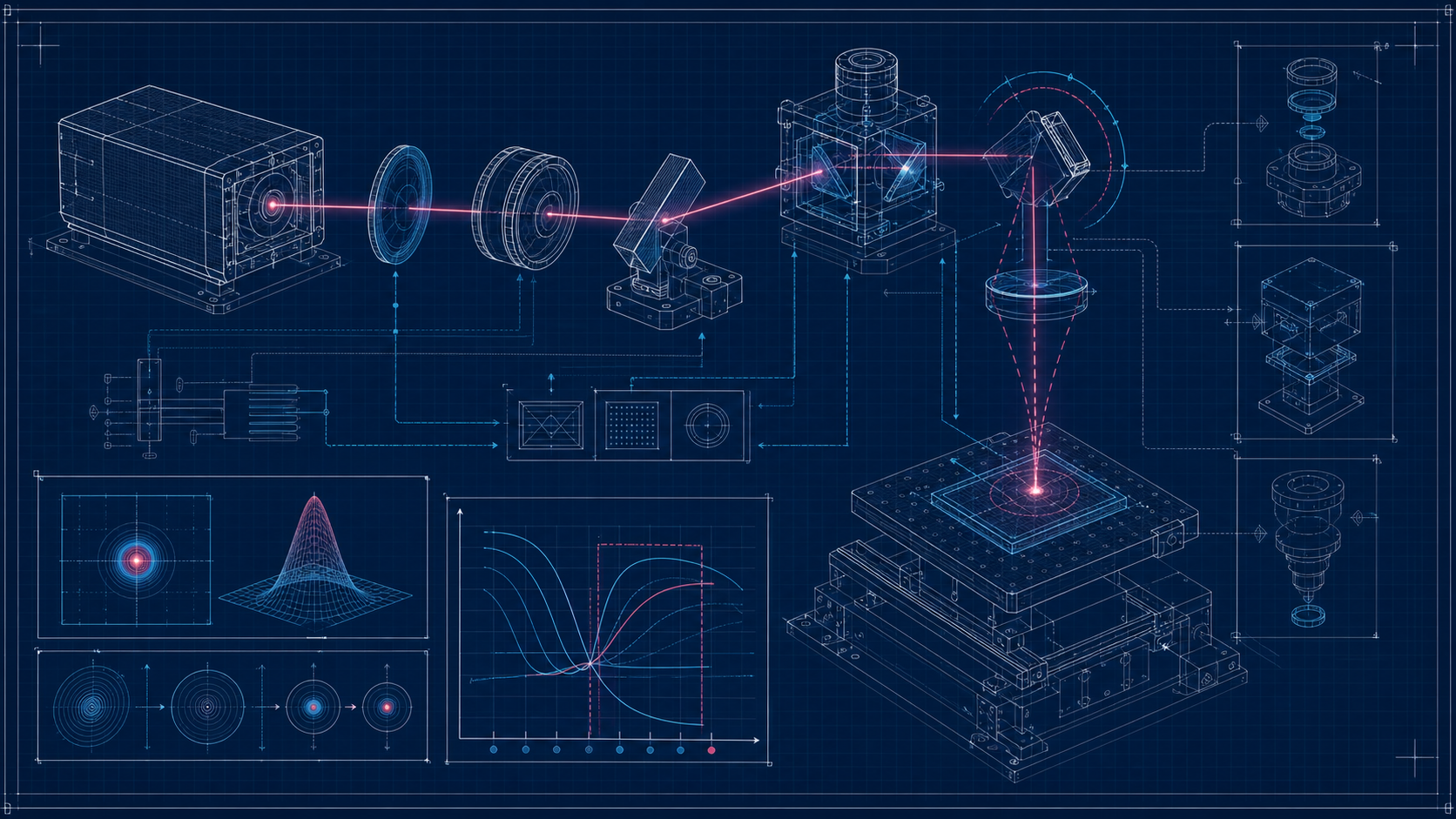
In mono-material packaging, even small differences in processing depth affect ease of opening, moisture resistance, and sealing. Therefore, laser processing — which can control processing conditions without contact — becomes a strong candidate.
Even High Precision Cannot Drive Adoption Without Production Economics
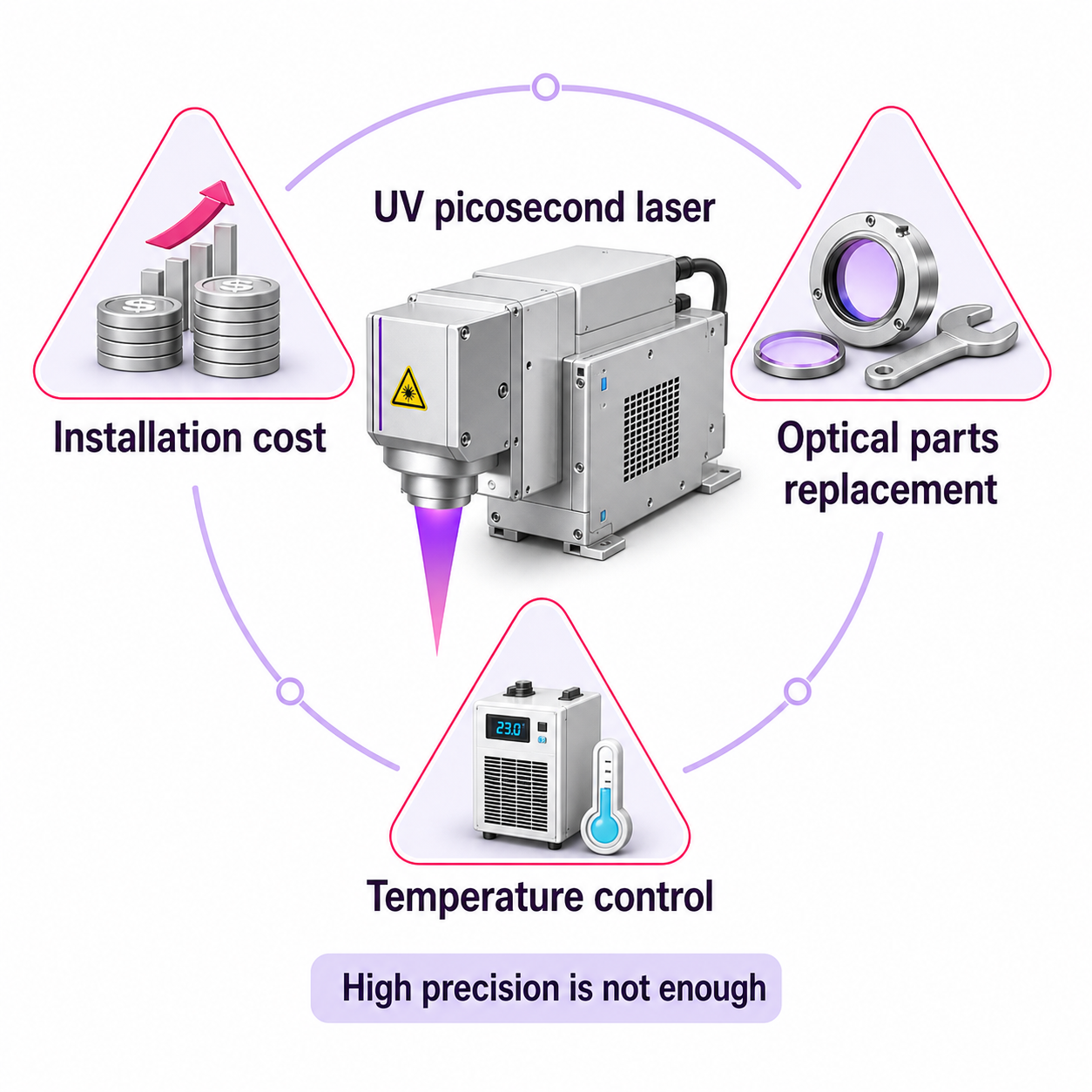
High-precision light sources such as UV picosecond lasers are sometimes proposed for precision processing of resin films. While they enable high-quality processing, equipment cost, maintenance frequency, and installation environment management requirements can become barriers to production-scale adoption.
What matters is not using the most advanced light source. It is whether the minimum-sufficient process that meets quality requirements, takt time, maintainability, and total cost can be designed.
In mono-material conversion for tablet packaging, the key to adoption is not just material substitution — it is process design capable of processing that material at production quality.