



Why Modular Laser Processing Units Matter for Scalable Manufacturing
When a manufacturer brings a production-scale project to a specialized laser team, the first concern is usually whether that team can actually bring a production line into operation. Strong processing technology is not the same as manufacturing production equipment and implementing it as a stable production line on the factory floor.
To address this concern, we redefined what constitutes core technology in laser processing.
Delivering a Full System Means Carrying Everything Around the Processing
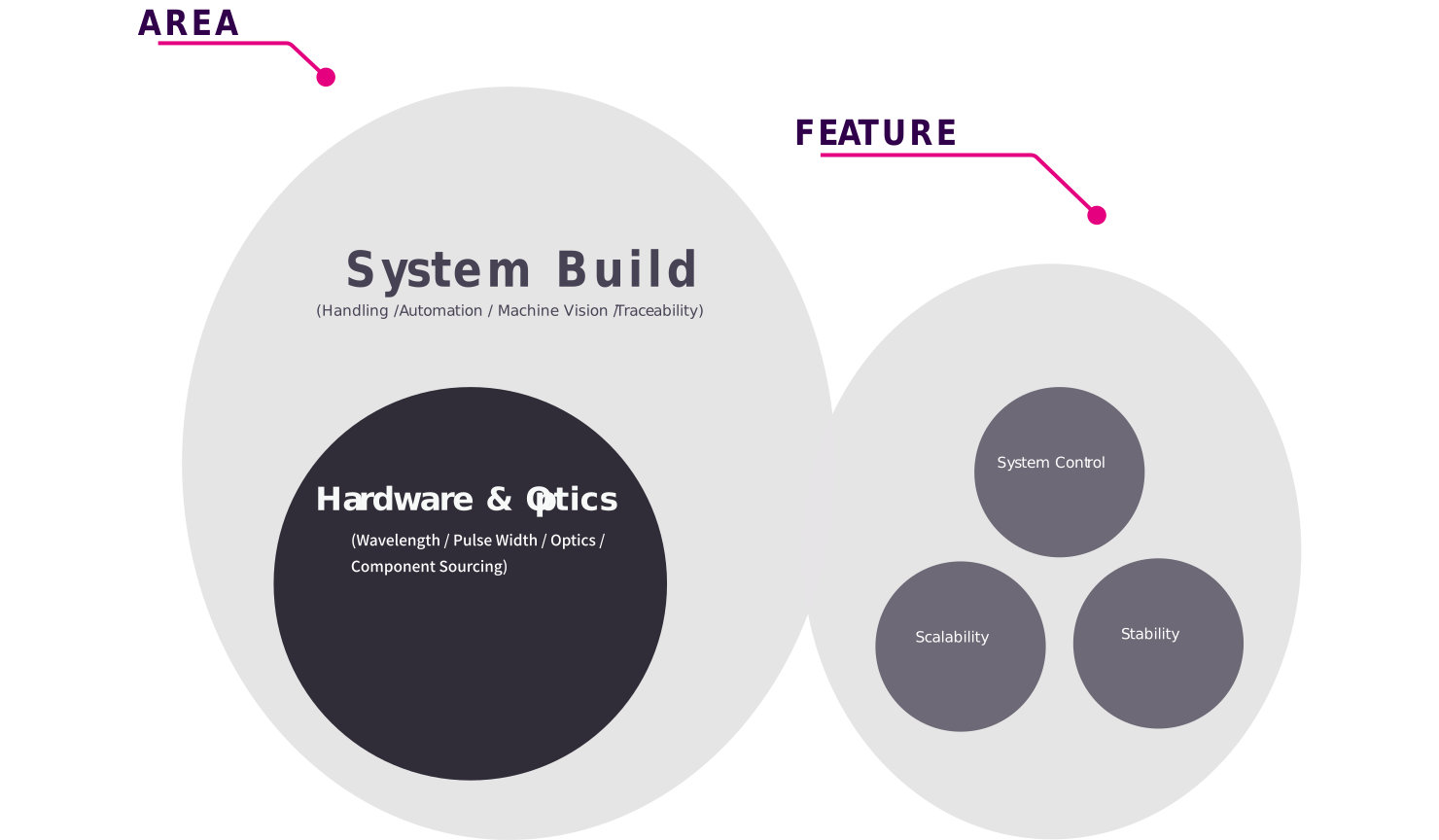
Delivering a production laser processing system does not mean only the laser source, optics, and processing control.
- Material handling to feed, position, and remove the workpiece
- Robot integration
- Roll-to-roll transport
- Connections to inspection equipment, traceability, MES, and production management systems
- Interfaces with the customer’s line PLC, safety circuits, and existing equipment
These requirements are project-specific and must be engineered for each production line. Coordination with peripheral equipment and upper-level systems can require more effort than the processing itself. If a small team carries all of this alone, the number of projects it can run in parallel quickly reaches a ceiling.
Carve Out the Processing Core as a Unit
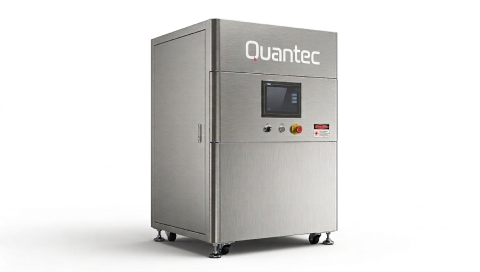
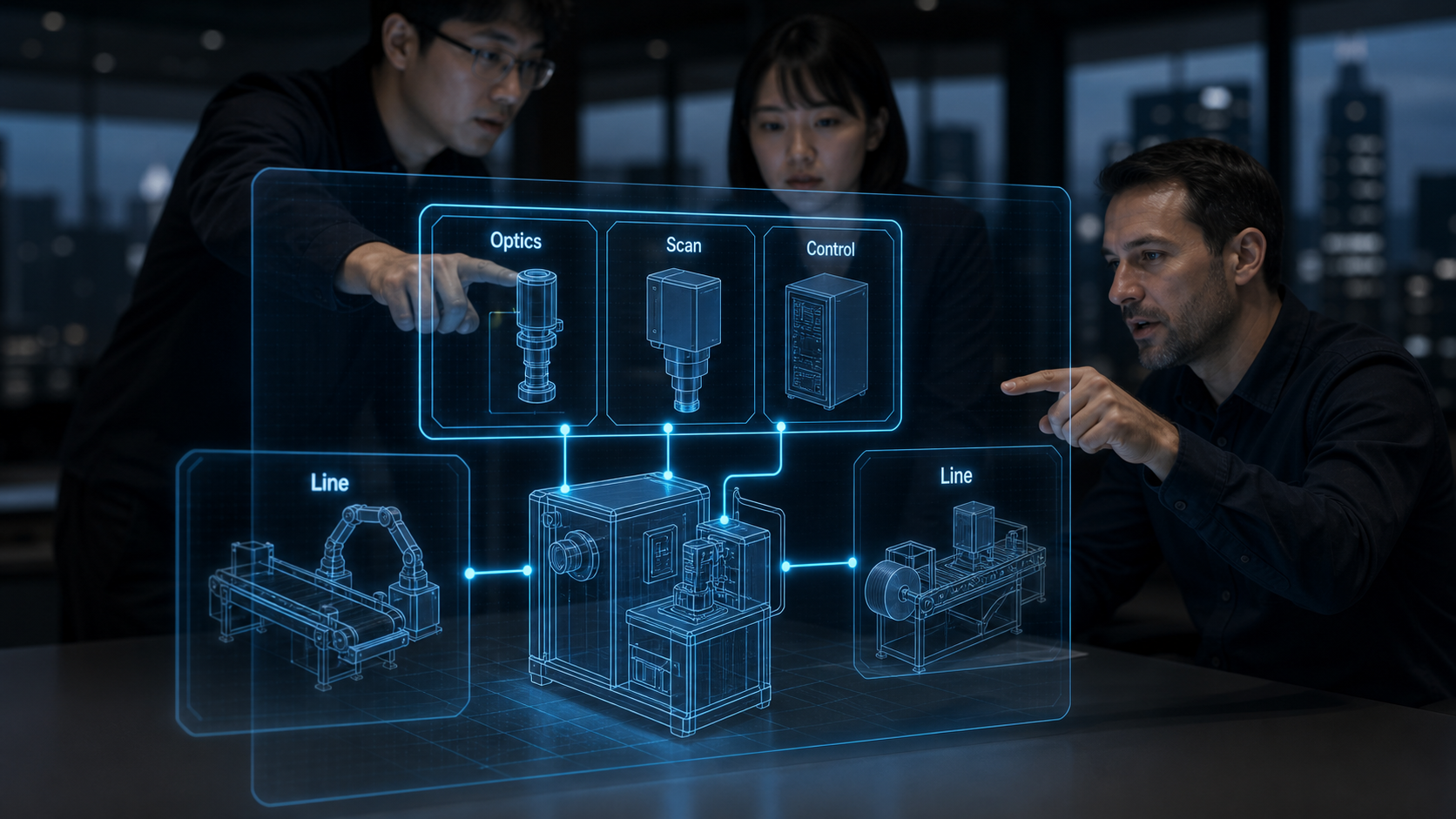
The key is not to carry the entire production system alone, but to carve out the core functions of laser processing as an independent unit.
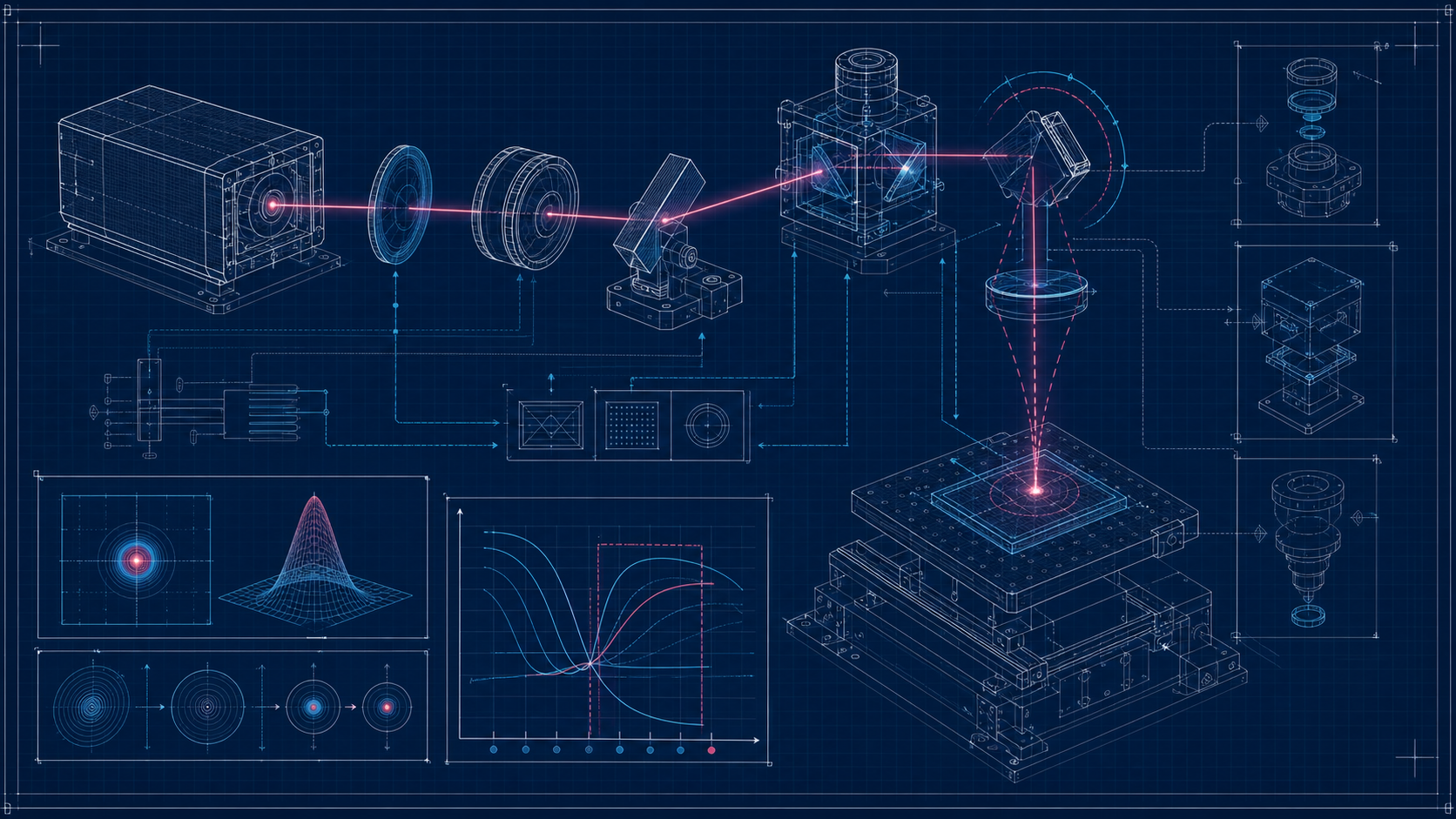
- Optical module: laser source / optics / processing head
- Processing control: synchronization of scanner, stage, and laser firing control
- Processing environment and safety design: safety interlocks / shielding enclosure / exhaust and dust collection / in-machine I/O
- External interfaces: signal and communication interfaces for handling equipment, inspection systems, upper-level PLCs, and MES
Each of these elements affects processing quality and repeatability and cannot be designed separately from the laser process. A production-ready laser processing unit must define how the beam reaches the workpiece, when it fires, how accurately it scans, and under what safety conditions it operates.
External interfaces then separate the specialized laser processing domain from construction of the overall production line.
Scale the Unit into Production Projects Through Collaboration
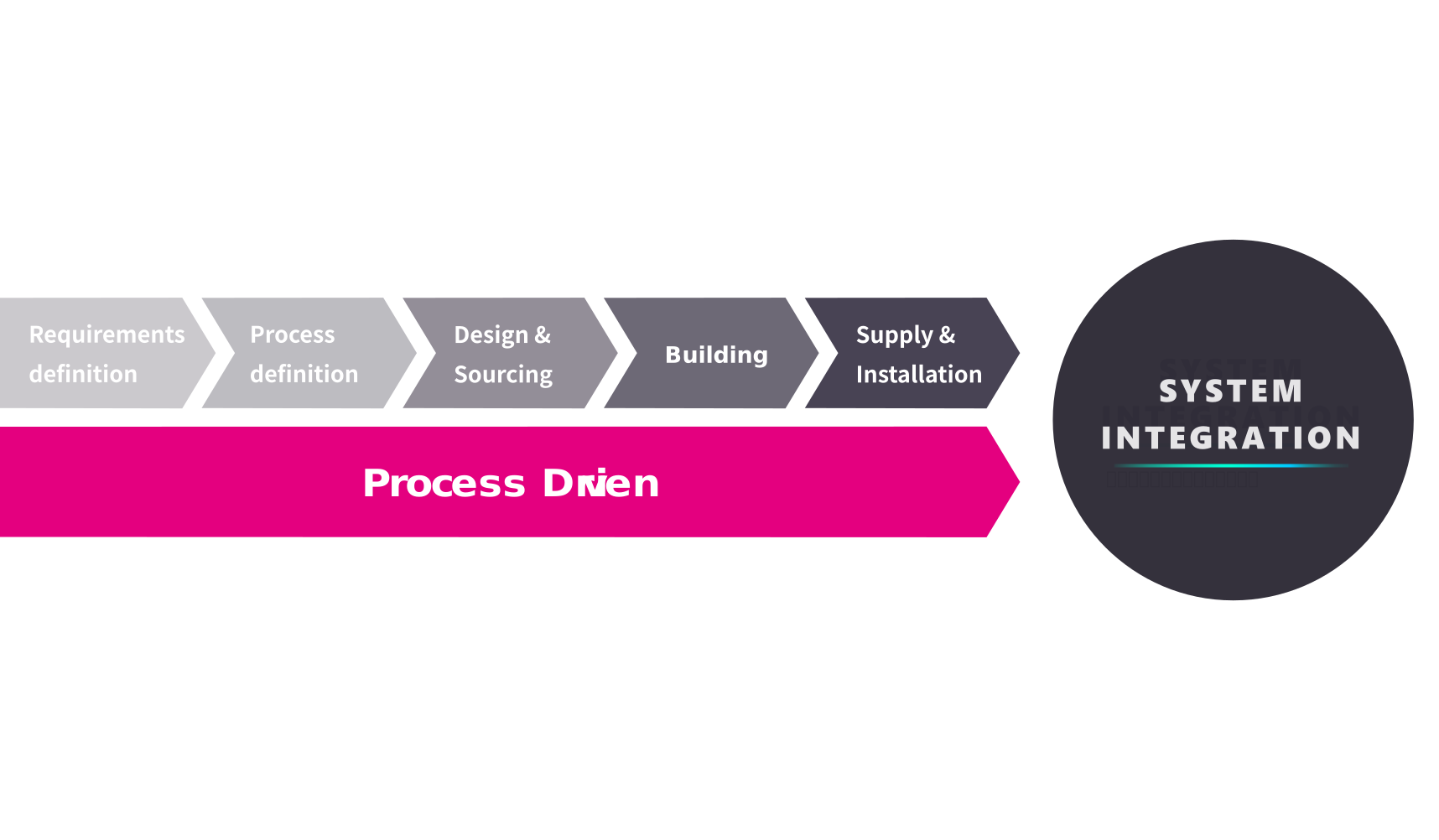
With modularity as the premise, responsibility becomes clear. Quantec focuses on process technology, optical design, processing control, safety design, processing quality assurance, and the environment that allows the laser beam to reach the workpiece reliably. These are the areas that demand the greatest laser processing expertise.
Construction of the overall production line — feeding the workpiece into the processing area, transporting it to the next step, inspecting it, and linking it to production history — is carried out with automation makers, line builders, inspection equipment makers, and robot and transport equipment partners. This division of expertise helps production lines start up faster and more reliably.
That said, carving out a unit does not scale automatically. Where the connection points sit, how the process is transferred, and how quality is guaranteed — that design is the real substance of modularization. The right form of collaboration depends on the structure of each project.