


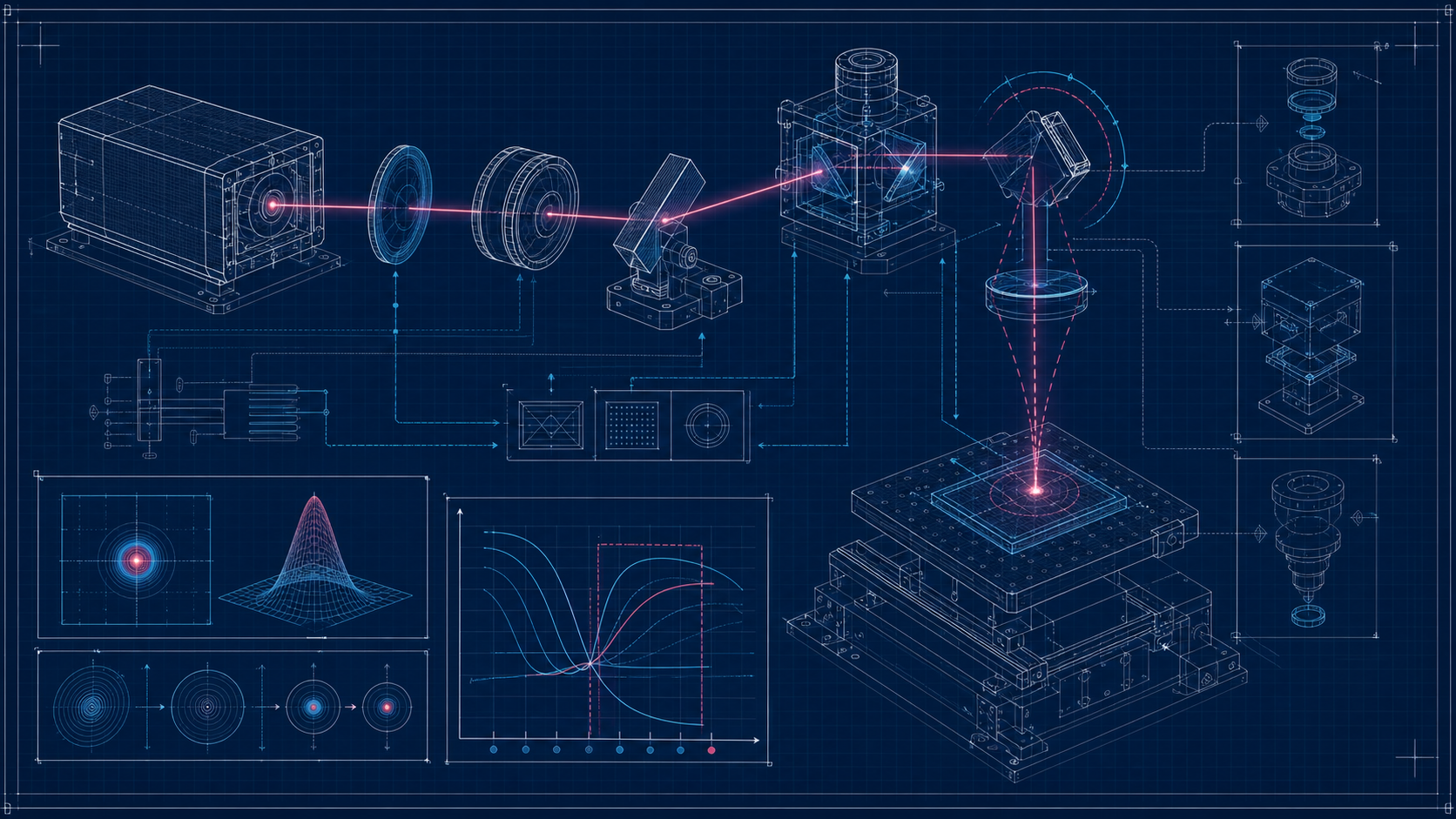
Material Reaction Design

We design from how the target material absorbs, reflects, heats, melts, decomposes, ablates, or changes structure under light.


What reaction occurs when light is applied to the target material? How can that reaction be reproduced through the optical system, timing, positioning accuracy, and safety environment? How should the result be evaluated and integrated into a production line?
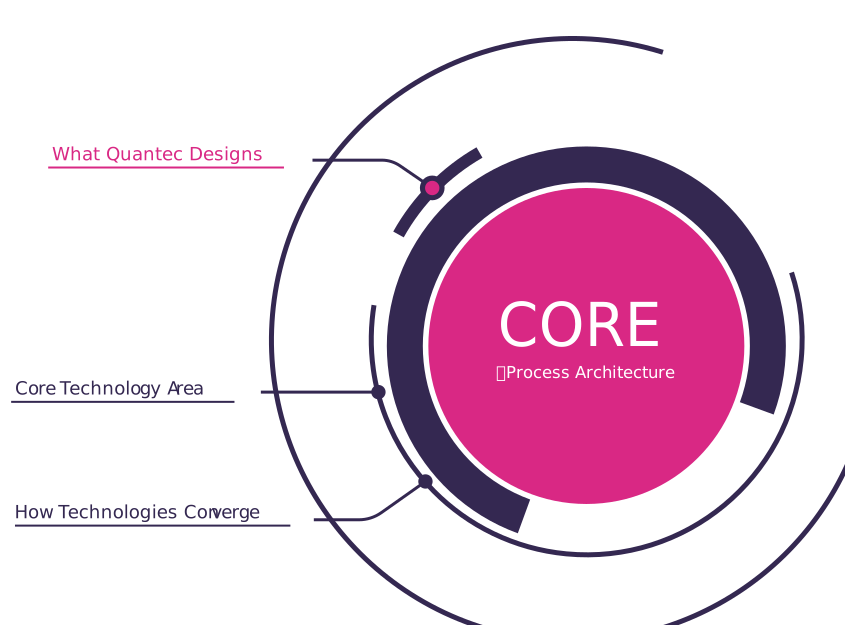
Quantec core technology is not simply condition-finding. We design material response, laser conditions, scanner control, processing environment, and evaluation methods as one system, then turn them into a laser processing process that can be reproduced in production.
We do not design a single laser parameter in isolation.
Alongside irradiation conditions such as wavelength, pulse width, energy density, repetition rate, scan speed, and focus depth, we treat the processing control system, including beam delivery, scanner and stage control, firing timing, workpiece positioning, and fixtures, as part of the same design. The laser operating environment, including temperature control, exhaust, and dust collection, and the evaluation criteria are also included.
We design from how the target material absorbs, reflects, heats, melts, decomposes, ablates, or changes structure under light.
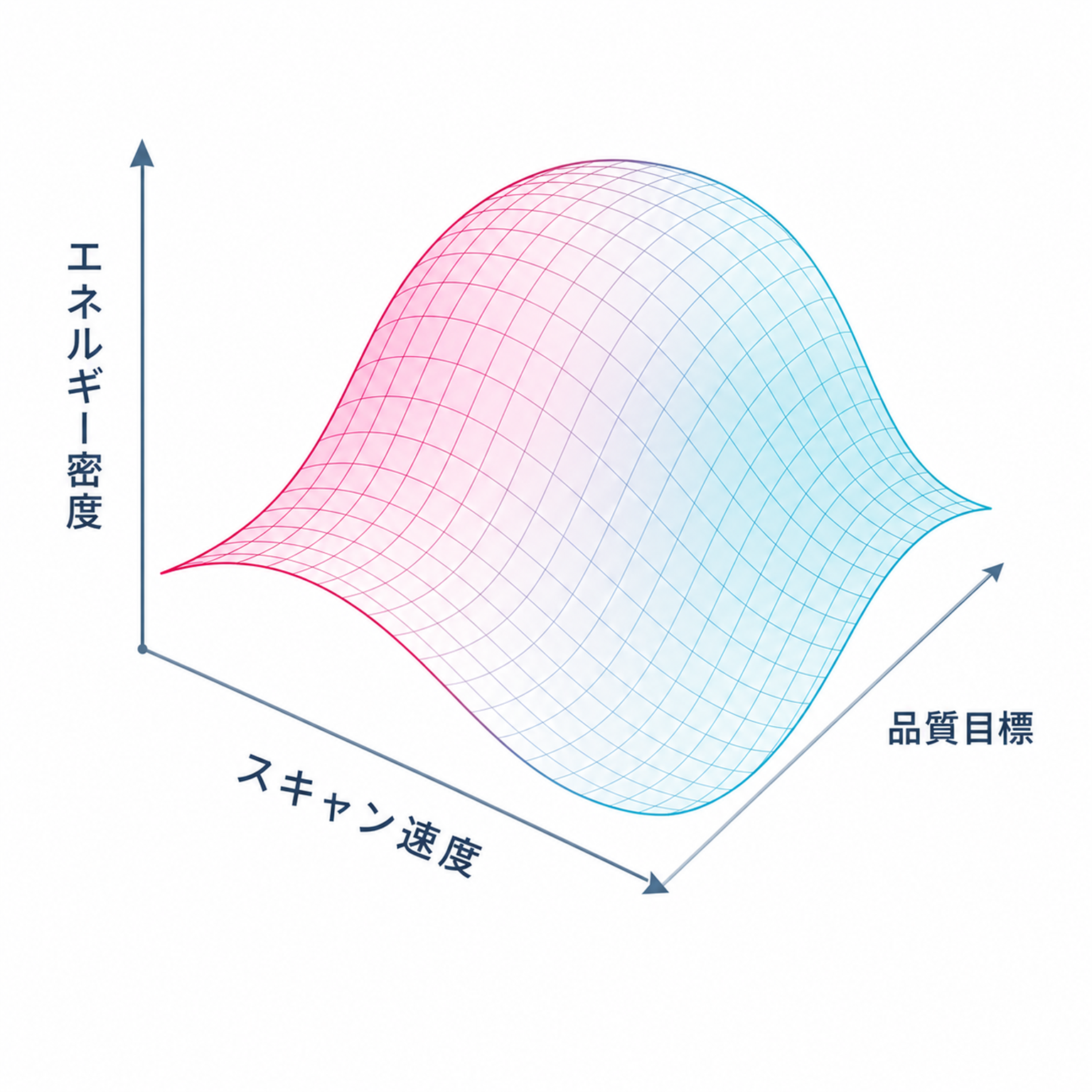
We combine wavelength, output, pulse width, repetition rate, scan speed, focus position, irradiation count, and heat accumulation to separate insufficient, stable, and excessive processing regions and define a range that tolerates production variation.
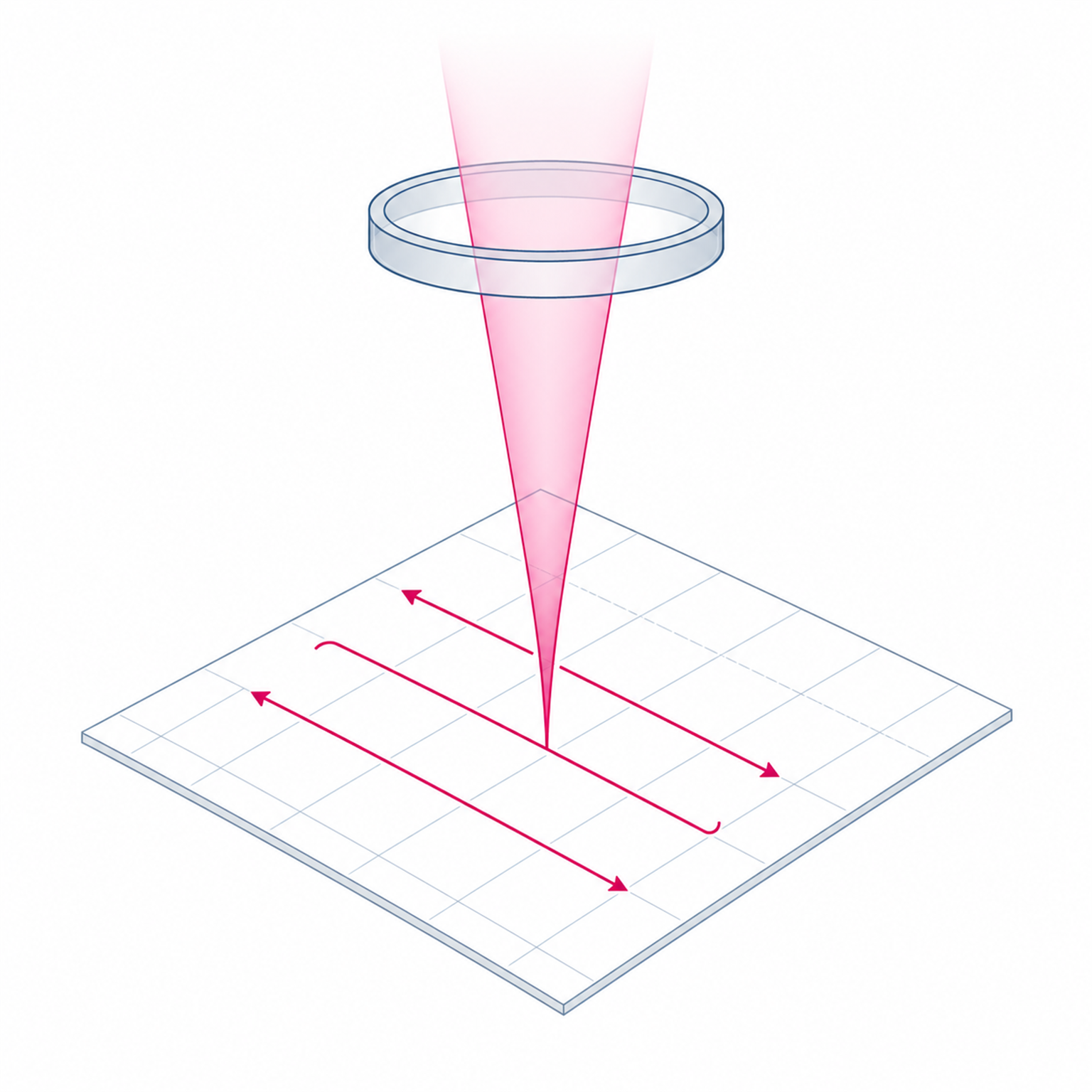
We design the optical system, processing field, focus depth, beam diameter, and scan path so laser energy reaches the workpiece reliably.
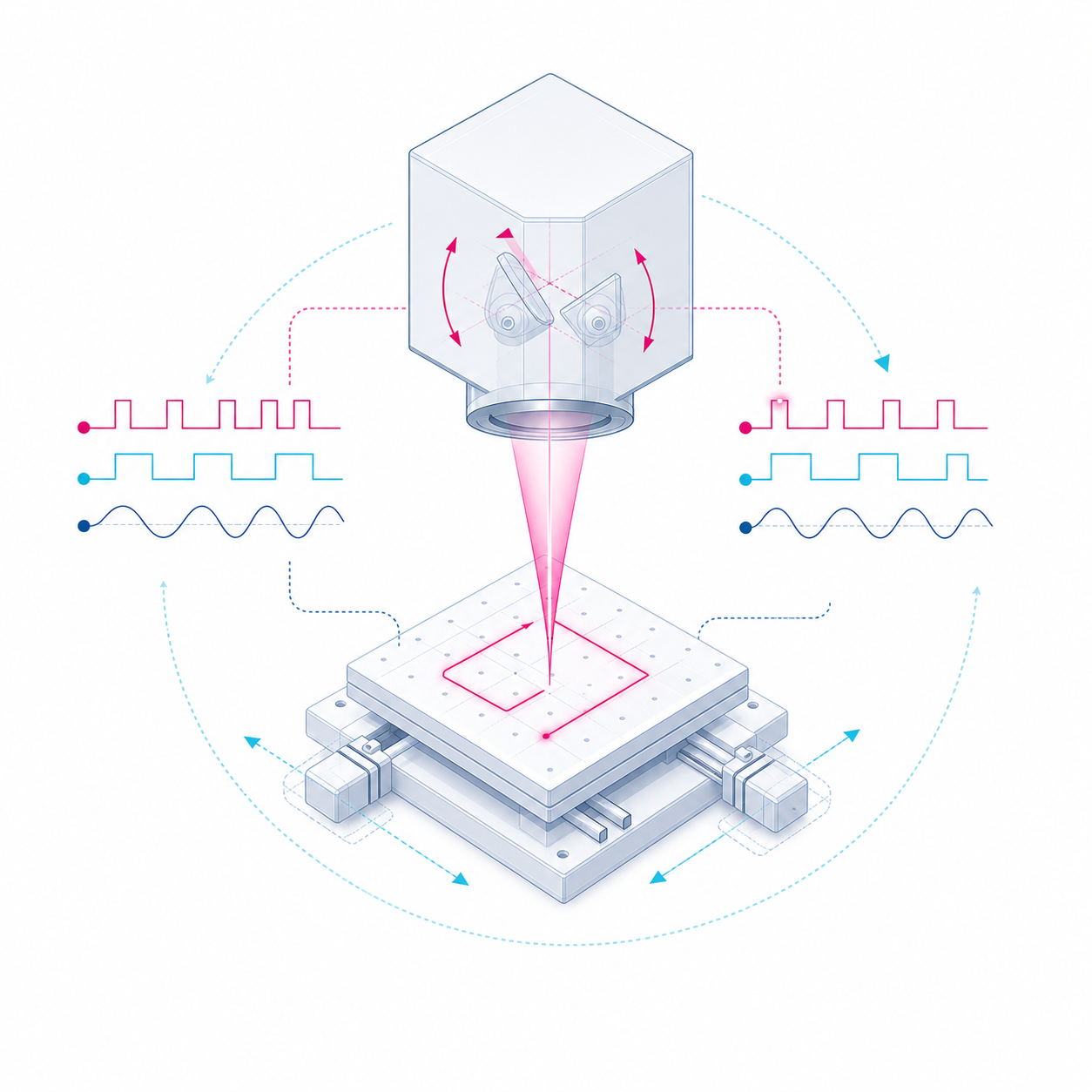
We synchronize the scanner, stage, and laser firing timing so the intended energy reaches the intended position for the intended duration.
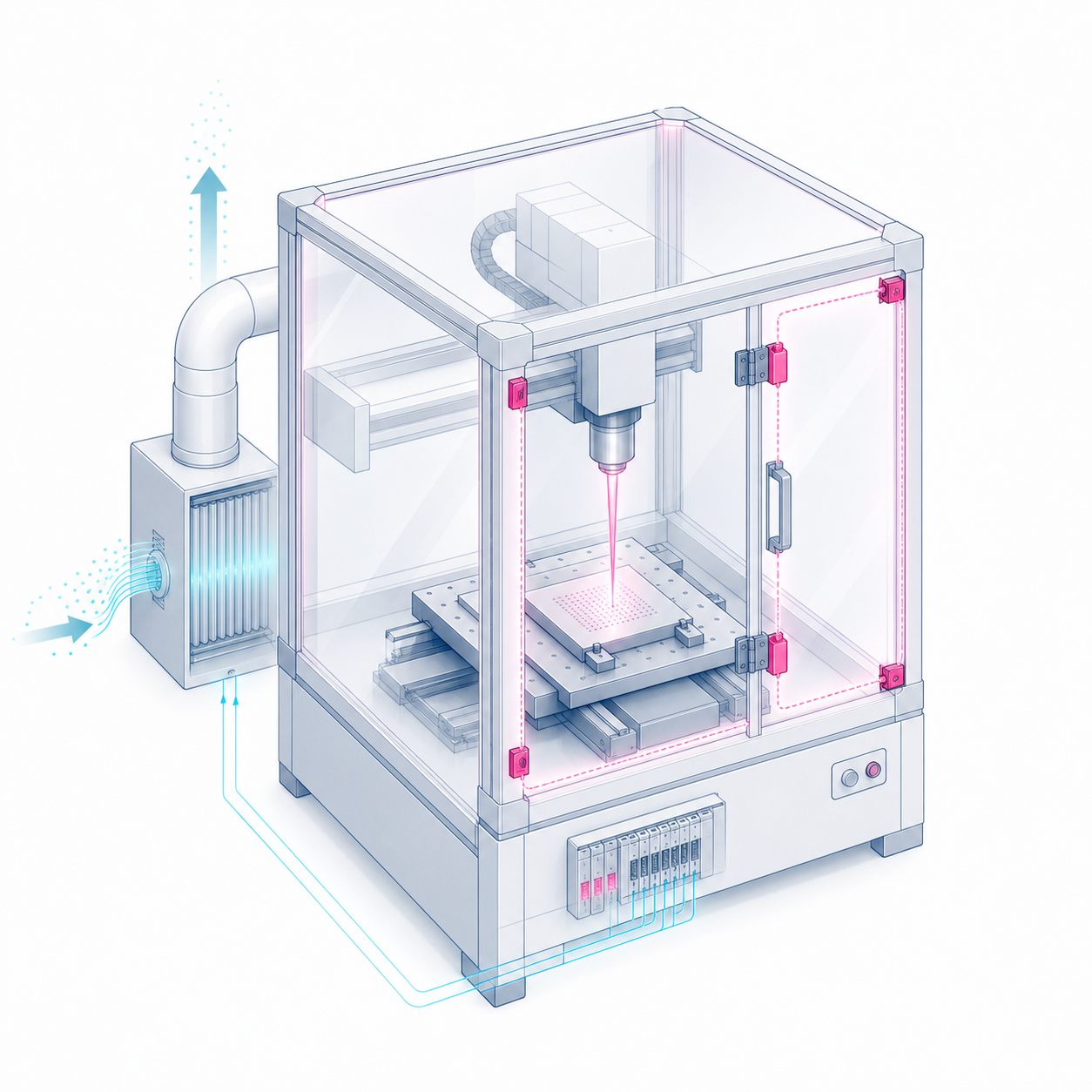
We design shielding, interlocks, exhaust, dust collection, enclosures, fixtures, workholding, and in-machine I/O as the environment required for stable laser processing.

We connect appearance, conductivity, strength, residual damage, cross sections, dimensions, repeatability, and yield to acceptance criteria.
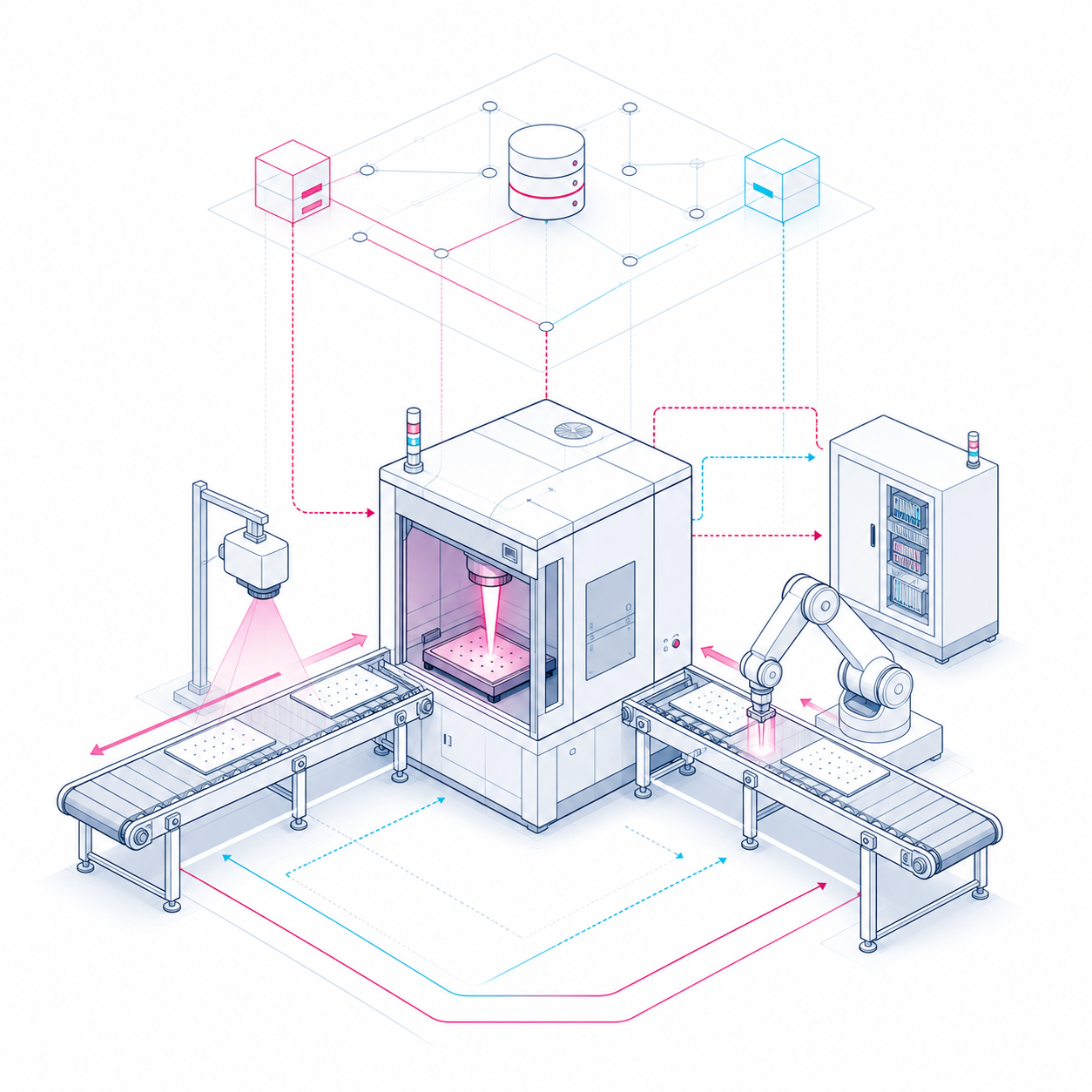
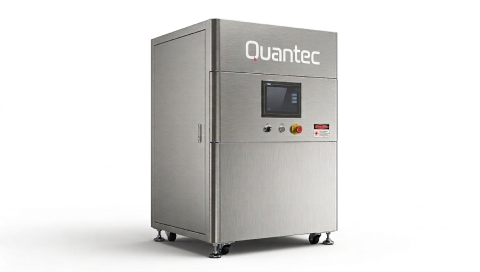
We design the laser processing unit for integration with handling, inspection, traceability, upper-level PLCs, MES, and production management systems.

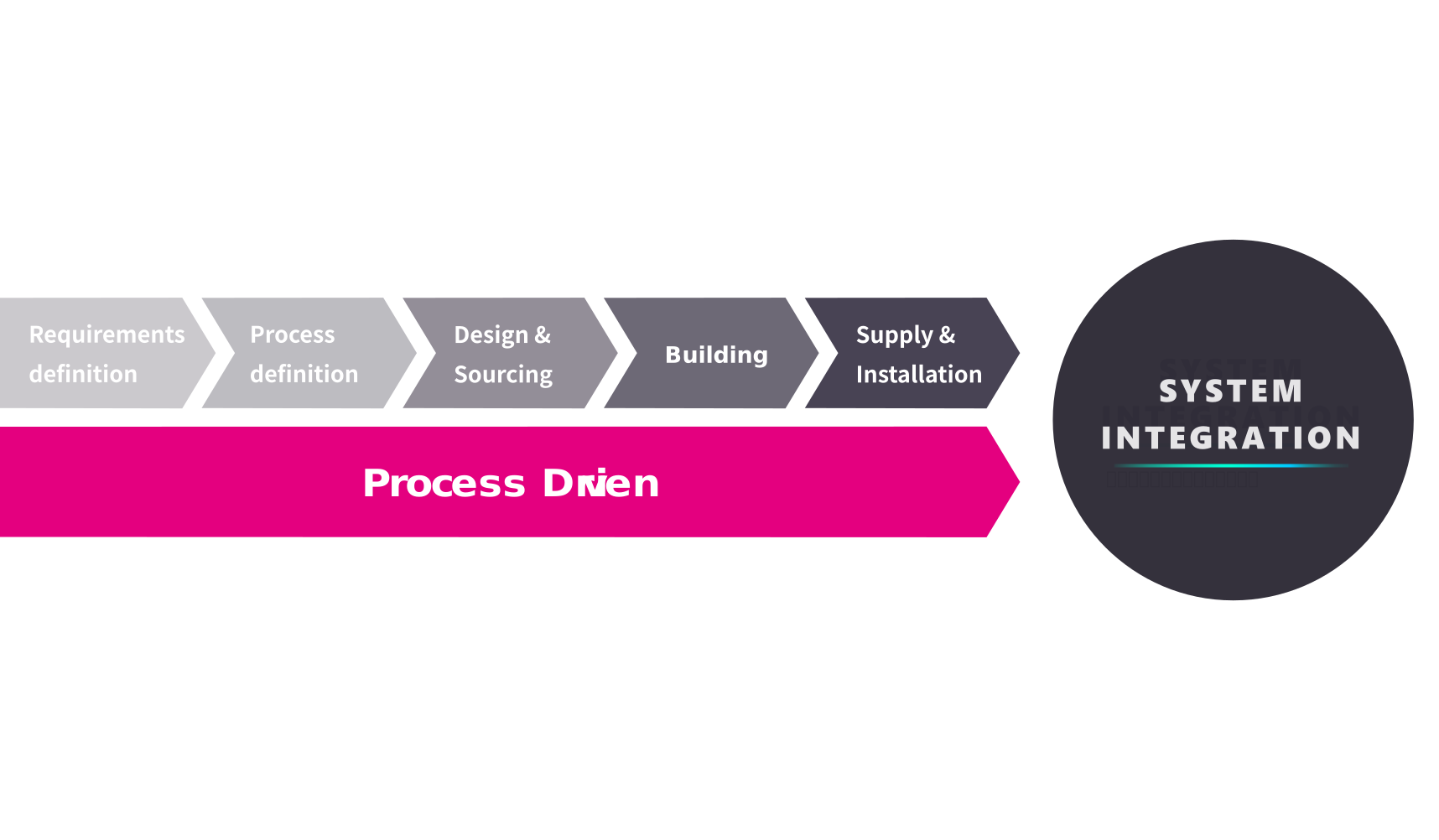
Clarify material, required function, quality target, takt time, and equipment constraints.

Design the reaction hypothesis, laser conditions, optics, scan strategy, and evaluation method.

Verify through test processing, measurement, cross-section, electrical and mechanical checks, and repeatability review.

Connect the verified process to equipment requirements, fixtures, handling, safety, startup, and stabilization.